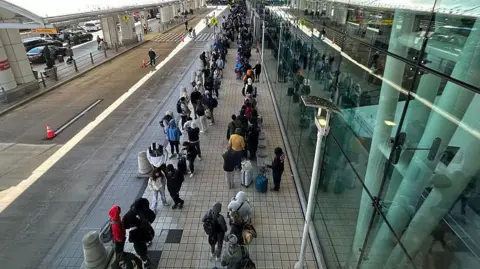
The partial US government shutdown has become the longest in American history, as lawmakers in Washington continue to fight over funding for the Department of Homeland Security (DHS).
On Sunday, the shutdown reached 44 days, surpassing the previous longest funding lapse, which ended in November 2025.
The current impasse has led to chaos at airports, due to a shortage of Transportation Security Administration (TSA) officers at security checkpoints as they go without pay checks.
White House border czar Tom Homan said on Sunday TSA agents should start receiving pay early next week after President Donald Trump signed an order attempting to free up cash.
It is unclear, though, whether Trump's executive order will face legal challenges, as the US constitution tasks Congress with authorizing spending for the federal government.
Trump, while on Air Force One on Sunday evening, told reporters that he was prepared to 'pay them [TSA agents] for as long as we need to' but urged Congress to pass a funding bill.
Homan also told CBS, the BBC's US news partner, that even after the shutdown ended and funding for TSA was restored, Immigration and Customs Enforcement (ICE) agents currently deployed to airports across the country to help with travel disruptions would remain 'until the airports feel like they are 100%.'
But there does not appear to be an end in sight in the feud between Republicans and Democrats over funding for the DHS, which encompasses TSA, as well as immigration agencies and the primary emergency agency that handles natural disasters. Congress is currently on a two-week break and left town without a deal.
On Friday, lawmakers failed to agree on a deal to re-open the DHS, which has been shut since 14 February. The impasse over immigration has left TSA officers in limbo, with some quitting and others calling in sick and not showing up to work as they go without pay. About 500 have quit thus far, according to DHS.
In turn, airport security lines have led to lengthy delays. Videos on social media of travelers snaked around buildings in massive queues have gone viral, and led to concerns about the US' ability to co-host the World Cup starting in June.