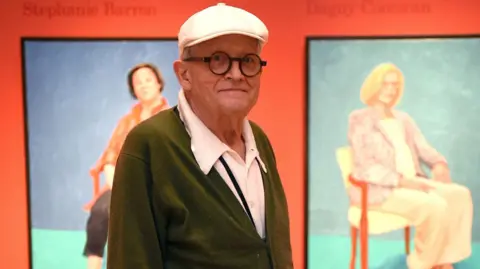
Tributes pour in as David Hockney, British art icon, dies at 88
Prime Minister Sir Keir Starmer led the nation’s reaction, describing the 88‑year‑old as a "giant" whose work reshaped modern British art.
The artist’s friends and fellow creatives paid tribute on social media and in the press. Art historian Dame Tracey Emin called Hockney a ‘wonderful man’ who “changed the perception of Britishness.” LGBTQ+ activists highlighted his pioneering role in queer art before it was socially accepted.
Hockney showed remarkable adaptability throughout his career, moving from Yorkshire landscapes to California swimming pools, to iPad commissions in the 21st century. “His work proved that art could evolve with technology,” said Alex Farquharson of Tate Britain.
The Tate announced plans for two new exhibitions: a seven‑decade retrospective at Tate Britain and a multimedia installation in Tate Modern’s Turbine Hall featuring his famous opera set designs. The former will continue the legacy of the 2017 exhibition, which remains the most visited in the museum’s history.
Hockney’s political legacy extended beyond painting. His donation of a $250,000 artwork to the early years of Stonewall’s charity underscored his commitment to gay rights.
The artist left behind a long‑time partner, a nephew who assisted in his studio, and numerous family members. His final years were spent in France and Normandy, where he spent the pandemic painting spring scenes on his iPad.
In his final months, Hockney reflected on his largest exhibition at the Fondation Louis Vuitton, admitting he once doubted he would ever see it. His attitude reflects his lifelong curiosity and fearless experimentation.
As Britain mourns the loss of a legendary figure, his work continues to inspire new generations. The art world will remember Hockney not only for his colour and composition but for his ability to see the everyday with extraordinary eyes.