'Look Mum, one point': Why does the UK keep getting Eurovision wrong?
Another year, another flop. The UK has self-destructed at Eurovision all over again.
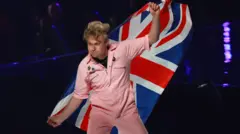
Look Mum No Computer, aka musician Sam Battle, got one solitary point, ending up in last place. It’s the third time we’ve been at the bottom of the table since 2020. We've made the top 10 once since 2010. This is the fourth consecutive year I’ve written a post-mortem on our failure. Believe me, I don't want to be here – but here we are.
In the run-up to the contest, there was little hope that Sam's shouty synth-pop banger Eins, Zwei, Drei, would fare well. But the musician gave it his all, stomping around the stage in a bright pink boiler suit while singing about quitting his office job so he could go to Germany and count to three (I am not making this up). It was, as Graham Norton observed, 'a big swing'.
Now, look, I'm all for taking a chance. If anything, our previous Eurovision entries played it too safe, pandering to a cliché of polished electro-pop. Sam was different. Eccentric and engaging, with the uncontainable energy of a shaken-up Coke bottle, he came up with a song that, for once, sounded uniquely British.
'I have to applaud the BBC for the ambition,' says Adrian Bradley of the Euro Trip podcast. 'They took a risk on something that maybe people won't like, but which some people might pick up the phone and vote for.' Yes, they took this risk, but nobody really loved it. Juries awarded it one point. The public gave it zero.
The song's hiccupy beat and zany references to jam roly-poly and custard left Europe bewildered. Journalist Filippo Baglini noted, 'I think the song, honestly, is not a great song for the UK. The UK is the best at music all around the world.' He insisted that the entry was simply not good enough.
It seems that the UK looks at Eurovision through a lens of it being a funny event and ends up sending novelty or joke entries that never seem to perform well. When they do make an effort—like with Sam Ryder, who managed second place in 2022 for a good song and performance—it works.
Unfortunately, the BBC has relied on less-established talent in recent years, which detracts from the competitive edge needed for Eurovision. Contestants have included independent artists without major label backing, which could be a reason for the underwhelming results.
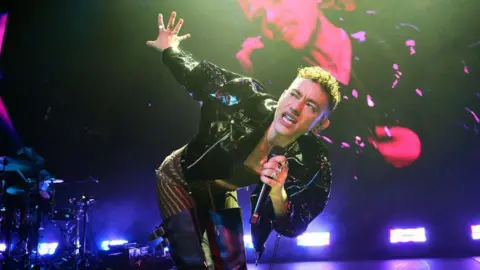
What can the UK learn from countries like Finland, who have struggled similarly but recently found success? Finnish artists now embrace their quirks and individuality to resonate better with an audience. Cha Cha Cha, a rave-metal anthem, became the breakout hit of Eurovision 2023, a testament to the value of being unapologetically unique.
Perhaps the next couple of months could be spent courting record labels and songwriters, instead of leaning on the same few collaborators who haven’t delivered in recent years. As Eurovision fans have suggested, the UK needs a contestant who gives it their all, resonates with the public, and embraces the fun, making fireworks a part of the show!