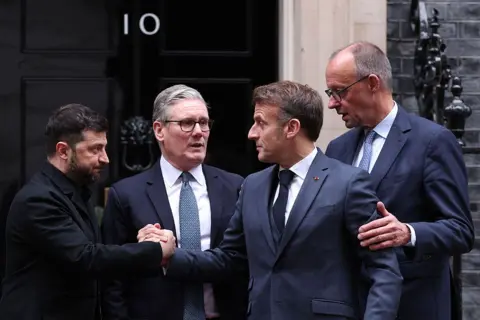
Ukraine's President Volodymyr Zelensky has met key European allies as he faces US pressure to reach a swift peace deal with Russia.
In London, Zelensky held talks with Prime Minister Sir Keir Starmer, French President Emmanuel Macron, and German Chancellor Friedrich Merz.
The meeting came amid US efforts to secure a quick agreement between Moscow and Kyiv aimed at ending the ongoing war in Ukraine.
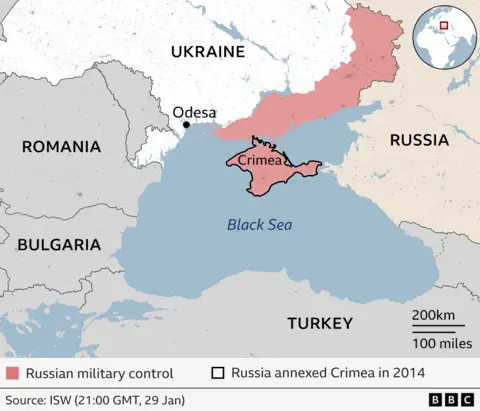
For Kyiv, the key issues in these negotiations are the potential concession of territory to Russia and obtaining robust security guarantees to ensure compliance with any future agreement.
Ahead of the London meeting, Starmer reiterated the necessity for hard-edged security guarantees for Ukraine, emphasizing that Kyiv must be the architect of its own future without external conditions imposed upon it.
While the high-profile gathering underscores solidarity among major European powers, the implications extend beyond Ukraine, impacting the broader security landscape in Europe.
Concerns persist that if Russia is permitted to retain Ukrainian territory, it could set a precedent, potentially encouraging further aggression against European nations.
Despite the show's visual unity, European leaders navigate a delicate balance of showing support for Ukraine while adhering to US pressures. The recent National Security Strategy from the US highlighted accusations towards European leaders for holding unrealistic expectations regarding the war's resolution.
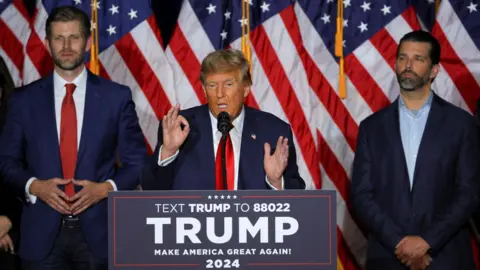
Internal fears in Europe are magnified by political shifts, particularly with the prospect of Donald Trump potentially returning to the White House, which poses uncertainties around continued unwavering support for Ukraine.
The European leaders remain apprehensive that any rapid resolution advocated by the US may lead to only a fleeting respite in Russian hostilities rather than establishing a stable and enduring peace.
Escalating incidents, including drone disruptions across Europe and cyberattacks linked to Russia, have underscored the proximity of the conflict to European soil, instilling a sense of urgency among leaders to seek a strategic approach without aggravating existing tensions with the US.
Financially constrained and dependent on US military capabilities, Europe grapples with its defense posture and seeks to align its peace strategy with that of Washington, carefully navigating their public rhetoric while addressing internal budgetary realities.
Despite these hurdles, European leaders express a reluctance to confront US strategies directly. Starmer characterized US involvement in peace negotiations as progress, a sentiment mirrored by German Chancellor Merz, who noted skepticism over specific details while stressing the need for ongoing dialogue.
The European landscape remains fraught with challenges as leaders strive to assert Ukraine's sovereignty while treading lightly around US expectations for a negotiated settlement, showcasing the complexities of modern geopolitics.