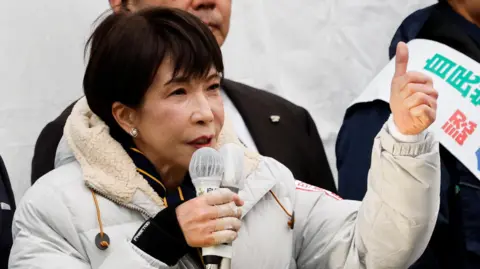
Millions in Japan are voting in a snap election called by Prime Minister Sanae Takaichi, whose coalition is predicted to clinch a decisive win. Just months after she was elected by lawmakers, Takaichi decided to go to the polls to seek the public's mandate.
Polls show her Liberal Democratic Party's (LDP) coalition with the populist Japanese Innovation Party could bag up to 300 of the 465 seats in the Lower House, marking a turnaround for the LDP which lost control of both chambers of Japan's parliament last year. The conservative leader has won over some voters by offering tax cuts and subsidies, but critics say these will deal a heavy blow to Japan's sluggish economy.
Nearly 4.6 million people had cast early ballots as of a week ago, down 2.5% from the previous election in 2024, with the decline attributed to heavy snow in the northern and western regions. Observers say Takaichi's personal popularity may help boost the LDP's showing in this election.
An admirer of former UK leader Margaret Thatcher, Takaichi has long pursued the ambition of becoming Japan's Iron Lady. Despite her traditional views on gender and family, Takaichi has garnered a strong following, especially among youth aged 18 to 30, with her government’s approval ratings hovering above 70% since she took office in October.
However, the snap election presents risks for Takaichi. The LDP's longtime coalition partner Komeito has formed a united front with the Constitutional Democratic Party, posing a significant challenge. Additionally, the government's spending-heavy measures may raise concerns about financial stability.
Takaichi has also faced backlash over her foreign and security policy stances, especially regarding China, further complicating her party's position. As this pivotal election unfolds, the outcome will have significant implications for Japan's political landscape.
Polls show her Liberal Democratic Party's (LDP) coalition with the populist Japanese Innovation Party could bag up to 300 of the 465 seats in the Lower House, marking a turnaround for the LDP which lost control of both chambers of Japan's parliament last year. The conservative leader has won over some voters by offering tax cuts and subsidies, but critics say these will deal a heavy blow to Japan's sluggish economy.
Nearly 4.6 million people had cast early ballots as of a week ago, down 2.5% from the previous election in 2024, with the decline attributed to heavy snow in the northern and western regions. Observers say Takaichi's personal popularity may help boost the LDP's showing in this election.
An admirer of former UK leader Margaret Thatcher, Takaichi has long pursued the ambition of becoming Japan's Iron Lady. Despite her traditional views on gender and family, Takaichi has garnered a strong following, especially among youth aged 18 to 30, with her government’s approval ratings hovering above 70% since she took office in October.
However, the snap election presents risks for Takaichi. The LDP's longtime coalition partner Komeito has formed a united front with the Constitutional Democratic Party, posing a significant challenge. Additionally, the government's spending-heavy measures may raise concerns about financial stability.
Takaichi has also faced backlash over her foreign and security policy stances, especially regarding China, further complicating her party's position. As this pivotal election unfolds, the outcome will have significant implications for Japan's political landscape.