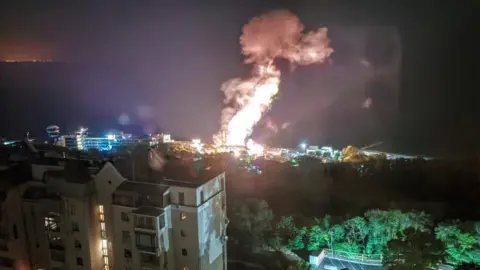
From Mariia's 16th-floor flat, the calm waters of the Black Sea stretch out into the horizon beneath the fading twilight. Up here you can see and hear when the drones come, she says, standing by a wall-length, floor-to-ceiling window. When they hit buildings and homes in the city of Odesa down below, we see all the fires too. Her daughter Eva, who is nine, has learned the shapes and sounds of the objects that zoom through the sky on a daily basis. She proudly shows off a list of social media channels she checks when the air raid alerts go off. She knows whether what's coming is a risk or a threat, and that calms her down, her father Serhii says.
There is scarcely a place in Ukraine that has not been targeted since Russia launched its full-scale invasion nearly four years ago. But in recent weeks Odesa – Ukraine's third largest city – has come under sustained attack. Through strikes on port and energy infrastructure, Russia is trying to cripple the region's economy and dent the population's morale.
Moscow, however, does not just hit facilities. Its drones, most of them as big as a motorcycle, regularly crash into high-rise buildings, exploding on impact and blowing glass and debris inward. The consequences are often deadly. A few months ago Eva said she was afraid the drone would come too fast and we wouldn't have time to hide, Mariia recalls. The family endured displacement from Kherson to Odesa and now faces the grim possibility of having to flee again as the assault intensifies.
Zoning in on their vital port, Russia's strategy aims to undermine both the infrastructure and the dignity of Ukraine's coastal city. With attacks disrupting electricity, supplies, and morale, Odesa residents are grappling with frayed nerves and harsh winter conditions. Many families seek solace from the chaos, yet practical and psychological impacts of the strikes weigh heavily on their daily lives. As they brace for potential evacuation and incapacitating military aggressions, hope flickers amid the destruction, revealing their indomitable human spirit.
There is scarcely a place in Ukraine that has not been targeted since Russia launched its full-scale invasion nearly four years ago. But in recent weeks Odesa – Ukraine's third largest city – has come under sustained attack. Through strikes on port and energy infrastructure, Russia is trying to cripple the region's economy and dent the population's morale.
Moscow, however, does not just hit facilities. Its drones, most of them as big as a motorcycle, regularly crash into high-rise buildings, exploding on impact and blowing glass and debris inward. The consequences are often deadly. A few months ago Eva said she was afraid the drone would come too fast and we wouldn't have time to hide, Mariia recalls. The family endured displacement from Kherson to Odesa and now faces the grim possibility of having to flee again as the assault intensifies.
Zoning in on their vital port, Russia's strategy aims to undermine both the infrastructure and the dignity of Ukraine's coastal city. With attacks disrupting electricity, supplies, and morale, Odesa residents are grappling with frayed nerves and harsh winter conditions. Many families seek solace from the chaos, yet practical and psychological impacts of the strikes weigh heavily on their daily lives. As they brace for potential evacuation and incapacitating military aggressions, hope flickers amid the destruction, revealing their indomitable human spirit.