US President Donald Trump has threatened to place tariffs on nations that do not go along with his ambitions to annex Greenland.
Trump said at a White House meeting that he may put a tariff on countries if they don't go along with Greenland, which is a self-governing territory controlled by Denmark.
He did not specify which countries might face new tariffs or the authority he would invoke to impose such import taxes in pursuit of his goal.
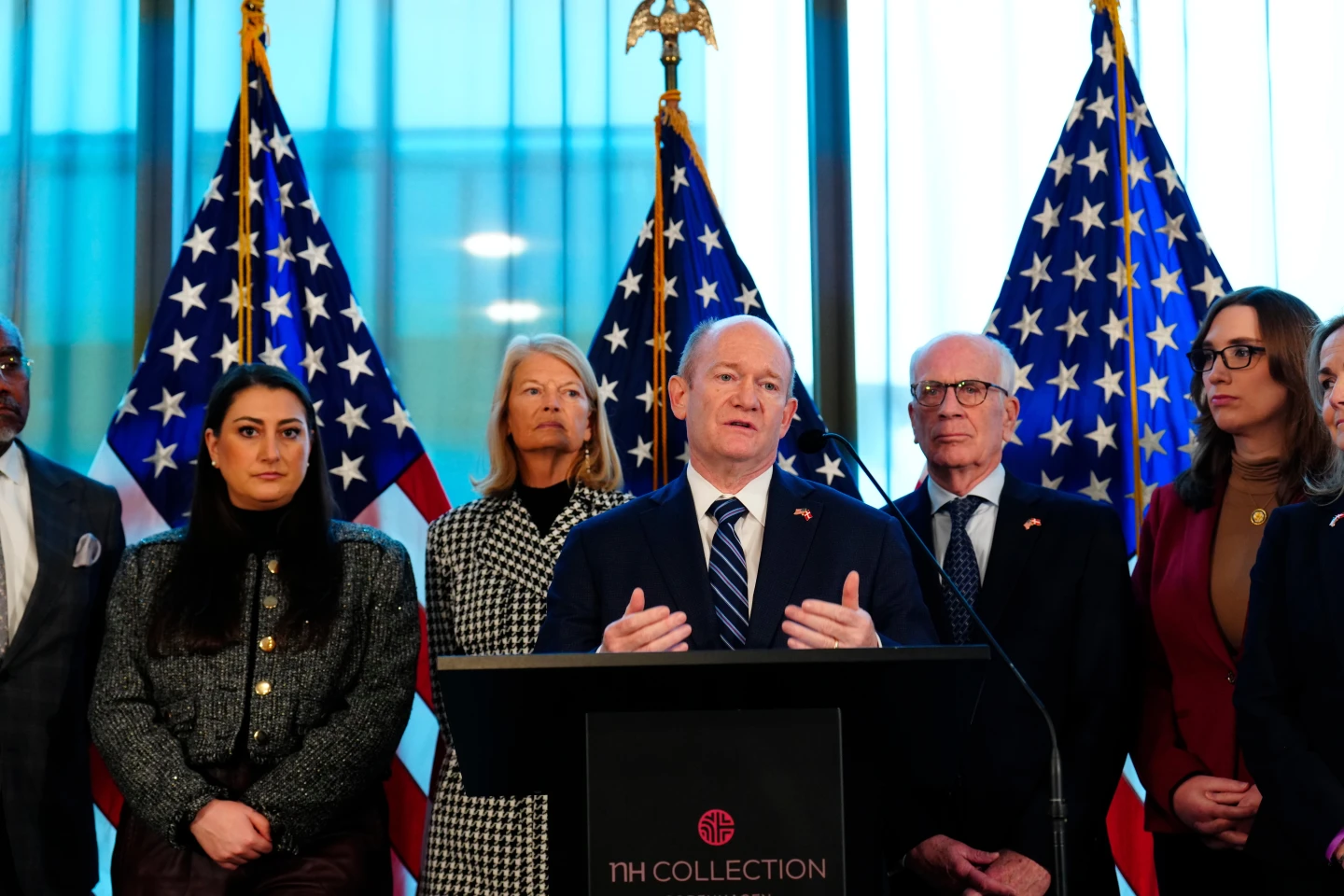
Along with Denmark and Greenland, other countries oppose his plans, and many in the US have expressed skepticism about an acquisition. As Trump spoke, a bipartisan congressional delegation was visiting Greenland to show support for the territory.
The 11-member group included Republicans who voiced concerns about the president's calls for the US to somehow acquire Greenland for national security reasons. They met MPs as well as Danish Prime Minister Mette Frederiksen and her Greenlandic counterpart Jens-Frederik Nielsen.
Group leader Senator Chris Coons, a Democrat, mentioned that their trip was to listen to the locals and convey their views back to Washington to lower the temperature.
Trump has emphasized that Greenland is essential for US security and has stated that Washington would acquire it the easy way or the hard way—an apparent reference to purchasing the island or seizing it by force.
I may put a tariff on countries if they don't go along with Greenland, because we need Greenland for national security, Trump stated during a meeting focused on rural healthcare.
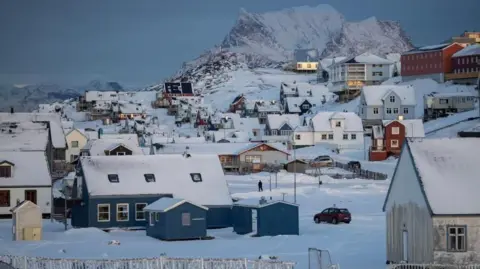
Greenland, while sparsely populated, is rich in resources and strategically located between North America and the Arctic. This makes it a valuable asset for early missile attack warning systems and monitoring vessels in the region.
The US currently has more than 100 military personnel stationed at its Pituffik base, which has been operational since World War Two. Under existing agreements with Denmark, the US can deploy as many troops as necessary in Greenland.
However, Trump insists that the US must own the territory to ensure its defense against potential Russian or Chinese threats. Denmark has warned that any military action would jeopardize NATO, the defense alliance where the US plays a leading role.
European allies have rallied in support of Denmark, emphasizing that the security of the Arctic region is a shared NATO responsibility, with the US being involved. Several countries, including France, Germany, and the UK, have dispatched troops to Greenland for reconnaissance missions.
French President Emmanuel Macron indicated that land, air, and sea assets will soon be operated in the area.
The congressional delegation's visit comes days after high-level talks in Washington failed to dissuade Trump from his plans. The group includes senators and House members known for their support of NATO.
While Coons and most of the group are staunch opponents of Trump, it includes moderate Republican Senators Thom Tillis and Lisa Murkowski. Greenlandic MP Aaja Chemnitz expressed hope following the meeting, stating they needed allies in their defense against the White House's stance.
Murkowski is also one of the sponsors of a bipartisan bill aimed at blocking any attempt to annex Greenland. Meanwhile, a rival bill supporting the annexation has been introduced by a Republican congressman.
Trump's envoy to Greenland, Jeff Landry, underscored the need for US discussions directly with Greenland's leaders rather than Denmark, expressing confidence in reaching a deal.
The foreign ministers from Denmark and Greenland participated in a meeting with US officials, where the idea of a US military takeover was reportedly not discussed. It remains clear that Denmark views Trump's intentions seriously, with an official stating, what he says is what he means.
Overall, the issue has sparked a complex diplomatic situation involving security, territorial integrity, and international relations.