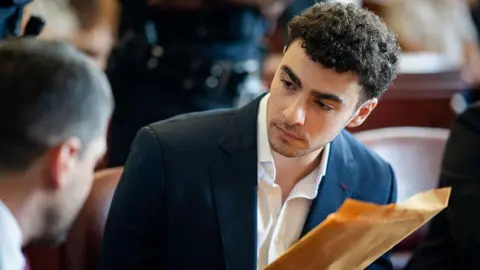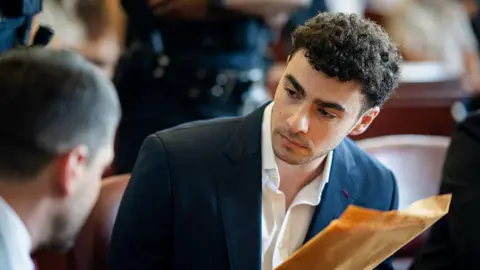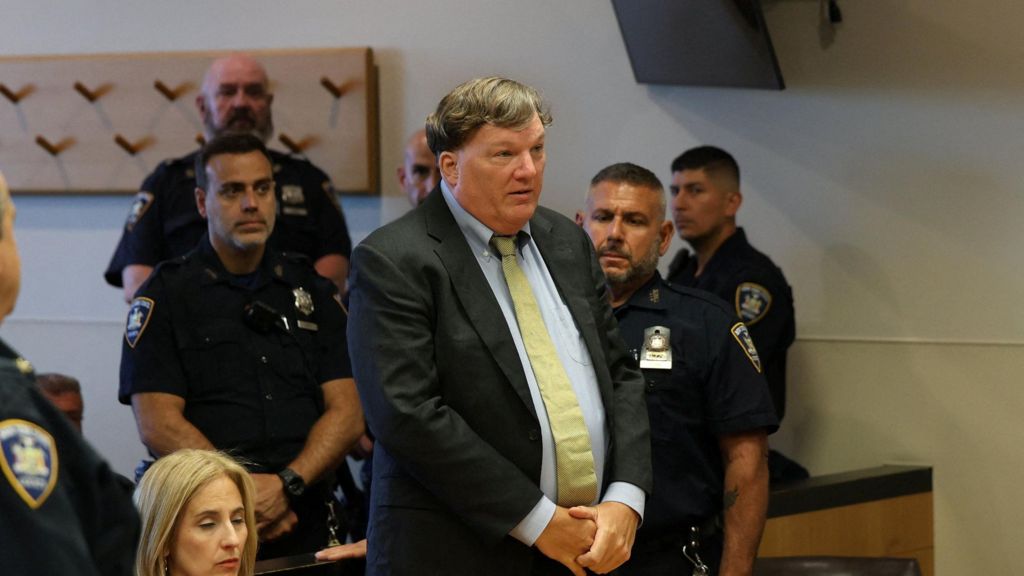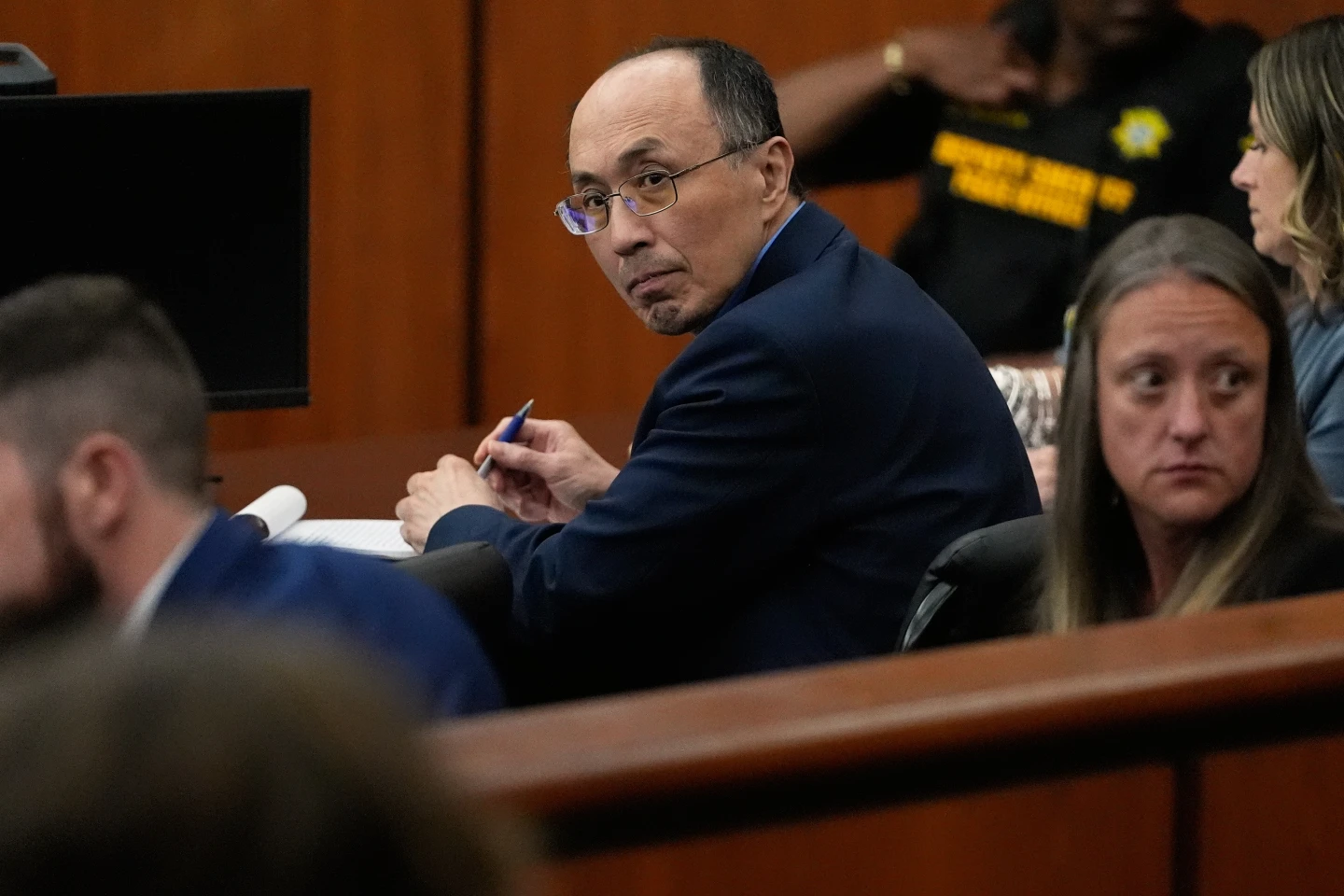
Luigi Mangione, the man accused of fatally shooting United Healthcare CEO Brian Thompson in Manhattan a year ago this week, appeared in court on Monday as his lawyers challenge the admissibility of key evidence in his case.
Mr Mangione, 27, has pleaded not guilty to both state and federal murder charges, which carry the possibility of the death penalty. The pre-trial hearing could last several days, as defence attorneys are expected to call a number of witnesses, including from Pennsylvania, where he was arrested at a McDonald's.
In September, a judge threw out state terrorism-related murder charges against Mr Mangione, arguing prosecutors had failed to establish the necessary evidence to justify them.
Mr Mangione's legal team is now hoping to convince a judge to exclude evidence including a gun and a notebook in which prosecutors claim he outlined a motive. The defendant was arrested shortly after allegedly shooting Mr Thompson, a father of two, as he walked into an investors' conference on a busy Manhattan street on December 4, 2024.
A date for either of his trials has not yet been set.
Walking into court on Monday, Mr Mangione wore a grey suit and shirt, and court employees removed his hand restraints before he sat, as his lawyers requested. This week's hearing focuses on whether prosecutors illegally obtained evidence from Mr Mangione during his arrest in Altoona, Pennsylvania, and whether it should be excluded as a result.
Defence attorneys are seeking to suppress statements Mr Mangione made to police post-arrest, including allegedly providing a false name before being read his rights. His attorneys are also trying to exclude from the trial the 9mm handgun that prosecutors assert matches that used in the killing, as well as writings found in Mr Mangione's backpack.
Prosecutors allege that Mr Mangione—a member of a prominent Maryland family and an Ivy League graduate—had written in his notebook about the deadly, greed fueled health insurance cartel. However, defence lawyers argue the search of his backpack was performed without a warrant, and thus those findings should be excluded.
Eliminating these critical pieces of evidence would be a significant win for Mr Mangione's legal team. However, legal experts suggest the chances of that happening are slim, citing various exceptions that may apply to warrantless searches in emergency situations.
Prosecutors are anticipated to present additional crucial evidence against Mr Mangione, including DNA or fingerprints on items discarded near the crime scene.
Furthermore, the defense is also aiming to prevent the federal government from seeking the death penalty, asserting that prejudicial comments from high-ranking officials could bias the case, which they contend is driven by political motivations.