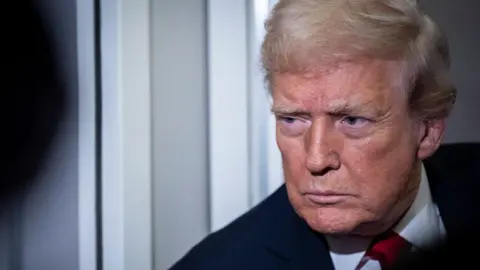
Donald Trump has repeated his threat to impose a 100% tariff on all films not made in the US, claiming the American industry had been 'stolen' by other countries.
He said on Monday that California had been heavily affected and the levy would 'solve this long time, never ending problem'.
In May, the US president stated he would talk to Hollywood executives about his plan and start the process of imposing the levy, citing the rapid decline of the American film industry.
Trump's remarks come as he announced a new wave of tariffs last week, including a 100% levy on branded or patented drug imports and a 50% tariff on kitchen and bathroom cabinets.
Trump said on his Truth Social platform: 'Our movie making business has been stolen from the United States of America, by other countries, just like stealing 'candy from a baby.'
He added that California, under its current leadership, has faced detrimental impacts, asserting the 100% tariff would apply to 'any and all movies that are made outside of the United States'.
The White House has yet to comment on when the tariff might come into effect and whether it would include streaming services like Netflix. Industry experts have raised questions about the practicality of enforcing such tariffs, considering the complexities of international film production.
Dan Coatsworth, an analyst, pointed out that many filmmakers are drawn to shooting in countries with better financial incentives, making it challenging to define what qualifies as an 'American-made' film. He noted that imposing such levies could inadvertently raise production costs and negatively impact consumer demand for film content.
Recent major films, including the likes of 'Wicked' and 'Deadpool', have been shot outside of the US, highlighting the ongoing challenges facing the domestic film industry despite the country's standing as a global production hub.
In 2022, US film production spending saw a significant drop, raising concerns about the future vitality of Hollywood.