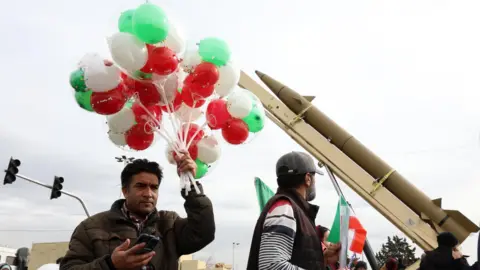
As the clock struck nine in Tehran on the 47th anniversary of the Iranian revolution, the night sky erupted with celebrations. Fireworks painted the dark canvas with vibrant colors, while chants of God is greatest resonated from rooftops and windows. Yet, amidst this spectacle, discontent echoed as voices called for change. Death to the dictator rang out from the shadows, a stark reminder of the protests that swept through the city last month, met with unprecedented force.
This year's celebration unfolded against a backdrop of significant unrest, as economic pressures continue to rise. The streets are adorned with flags, yet sentiments of disillusionment permeate the air. Residents express deep concerns over soaring prices and diminishing freedoms, as Iranians navigate a landscape fraught with economic hardship. Iranian President Masoud Pezeshkian, addressing crowds in Tehran, acknowledged the unrest, attributing it to external malign influences while also admitting to the government's shortcomings.
The mixture of jubilation and despair reflects a society at a crossroads, as calls for a more representative governance clash with the powerful hold of clerical authority. As families celebrated in the streets, the juxtaposition of loyalty and protest captured the complexities of Iran's current state, embodying a narrative that intertwines revolutionary pride with an urgent plea for change.