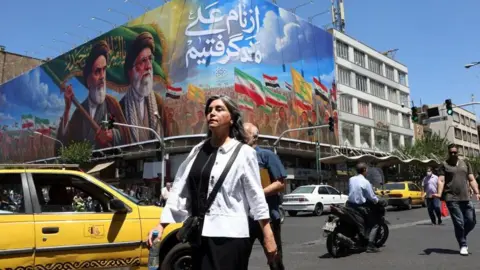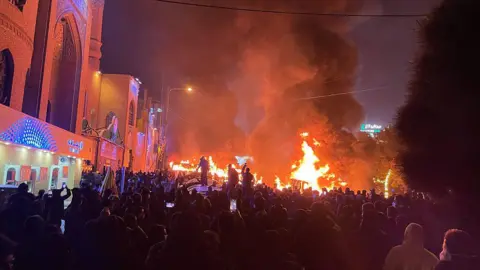
For Mojdeh and her husband, the question of US intervention in Iran is personal. In January, they traveled from Washington, DC to Tehran, only to find themselves trapped amidst rapidly escalating protests. Life was on pause, Mojdeh recalls, highlighting the unsettling nights when communication networks disappeared.
Surrounded by the chaos, the couple found themselves drawn into the protests, feeling compelled to act as tensions erupted around them. They described the atmosphere in Tehran as combustible, with many civilians expressing their dissatisfaction with the Islamic Republic.
Protests were sparked by mounting economic frustrations leading to demands for a change in governance, quickly becoming a challenge to the very foundation of the regime. Documenting the violence was challenging, with contrasting figures on casualties; 6,000 from HRANA and 25,000 from other human rights organizations, against a government claim of over 3,100 deaths.
Even after the crackdowns, discussions continue among Iranians - both in their homeland and abroad - about whether the US should intervene. Iranian-American voices represent a spectrum of opinions; Shirin believes foreign action is necessary to halt further violence, while others worry about the implications for their loved ones.
Roozbeh Farahanipour fears that intervention could result in more suffering, emphasizing that change should arise from within Iran. Ali, disillusioned by past reform attempts, argues that without US pressure, meaningful change is unlikely. Activist Hemad Nazari, meanwhile, suggests that intervention might be the only course left to alter Iran's political trajectory, underscoring the dire sentiments among those on the ground.
A storm of emotions stirs as the Iranian diaspora watches the turmoil unfold – hope for intervention clashing with fears of further violence. The debate over US involvement is now not just academic; it’s layered with personal pain and concern for the lives of millions back home.