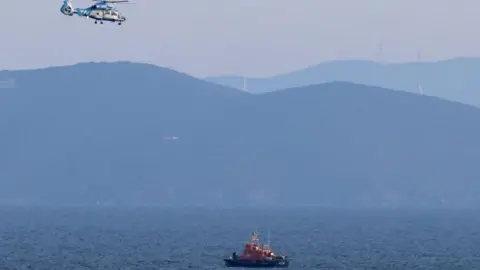
The death of 15 Afghan and Moroccan migrants after a speedboat carrying them collided with a Greek coastguard vessel has been presented by Greek authorities as an open and shut case. A statement issued late on Tuesday blamed smugglers for failing to comply with the [Hellenic] Coast Guard's visual and audible signals to turn their boat around.
The authorities stated the migrant boat was making dangerous maneuvers before veering into a patrol vessel off the Chios Strait, leading to the deaths and injuries of 24 others attempting to reach European soil. However, experience tells us to be wary of such instant and unequivocal explanations.
In the summer of 2023, on the same day when over 650 migrants were feared to have drowned, the official Greek narrative had already established blame on criminal gangs for overloading unseaworthy vessels. Survivors later contradicted this account, claiming coastguards caused the migrant boat to capsize during a failed towing attempt. As investigations continued, contradictions emerged in the official account.
Now, nearly three years later, four senior coastguard officials face criminal prosecution for negligent manslaughter linked to a decade-sized Mediterranean disaster. In light of the recent incident, questions arise about the legitimacy of the Greek media's narrative suggesting the migrant speedboat was to blame due to reckless behavior. Reports indicate a lack of survivor testimonies or independent evidence supporting official claims. Video documentation from the coastguard's interactions with the migrant boat could provide essential insight, yet uncertainties remain regarding whether such footage exists.
In this latest incident near Chios, much remains unanswered, and past instances illustrate a disturbing pattern where the influence of political pressures becomes evident. Opposition figures have condemned the coastguard's actions, asserting that current policies have transformed Greek waters into a graveyard for migrants. Immigration Minister Thanos Plevris, however, expressed trust in the coastguard’s account, reflecting the prevailing tension surrounding the humanitarian crisis at sea.
While the situation remains fluid, historical context suggests that finding the truth may prove challenging amid ongoing political and legal narratives.