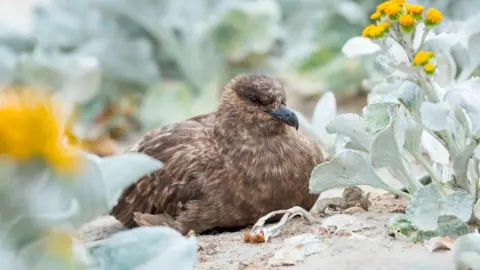
For years, scientists have warned that bird flu - better known as H5N1 - could one day make the dangerous leap from birds to humans and trigger a global health crisis.
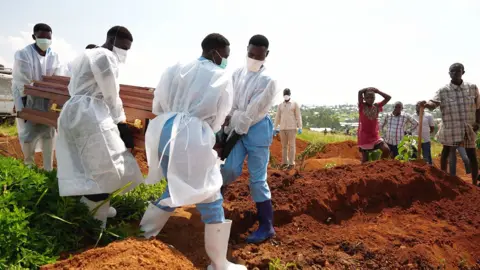
Avian flu - a type of influenza - is entrenched across South and South-East Asia and has occasionally infected humans since emerging in China in the late 1990s. From 2003 to August 2025, the World Health Organization (WHO) has reported 990 human H5N1 cases across 25 countries, including 475 deaths - a 48% fatality rate.
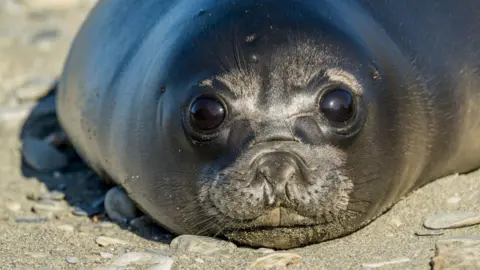
In the US alone, the virus has struck more than 180 million birds, spread to over 1,000 dairy herds in 18 states, and infected at least 70 people - mostly farmworkers - causing several hospitalisations and one death. In January, three tigers and a leopard died at a wildlife rescue centre in India's Nagpur city from the virus that typically infects birds.
Symptoms in humans mimic a severe flu: high fever, cough, sore throat, muscle aches and, at times, conjunctivitis. Some people have no symptoms at all. The risk to humans remains low, but authorities are watching H5N1 closely for any shift that could make it spread more easily.
That concern is what prompted new peer-reviewed modelling by Indian researchers Philip Cherian and Gautam Menon of Ashoka University, which simulates how an H5N1 outbreak might unfold in humans and what early interventions could stop it before it spreads.
The modelling published in the BMC Public Health journal uses real-world data and computer simulations to project how an outbreak might spread in reality.
The threat of an H5N1 pandemic in humans is a genuine one, but we can hope to forestall it through better surveillance and a more nimble public-health response, Prof Menon told the BBC.
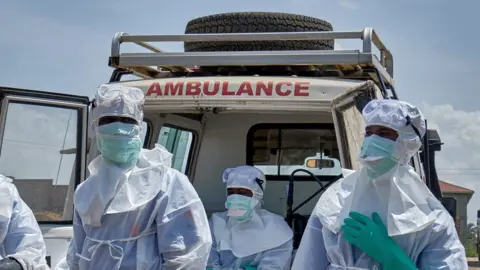
A bird flu pandemic, researchers say, would begin quietly: a single infected bird passing the virus to a human - most likely a farmer, market worker or someone handling poultry. From there, the danger lies not in that first infection but in what happens next: sustained human-to-human transmission.
Because real outbreaks start with limited, messy data, the researchers turned to BharatSim, an open-source simulation platform originally built for Covid-19 modelling, but versatile enough to study other diseases.
The key takeaway for policymakers is how narrow the window for action can be before an outbreak spirals out of control, the researchers say.
The paper estimates that once cases rise beyond roughly two to 10, the disease is likely to spread beyond primary and secondary contacts.
Primary contacts are people who have had direct, close contact with an infected person, such as household members, caregivers or close colleagues. Secondary contacts are those who have not met the infected person but have been in close contact with a primary contact.
If households of primary contacts are quarantined when just two cases are detected, the outbreak can almost certainly be contained, the research found.
But by the time 10 cases are identified, it is overwhelmingly likely that the infection has already spread into the wider population, making its trajectory virtually indistinguishable from a scenario with no early intervention.
To keep the study grounded in real-world conditions, the researchers chose a model of a single village in Namakkal district, Tamil Nadu - the heart of India's poultry belt.
Namakkal is home to more than 1,600 poultry farms and some 70 million chickens; it produces over 60 million eggs a day.
A village of 9,667 residents was generated using a synthetic community - households, workplaces, market spaces - and seeded with infected birds to mimic real-life exposure.
In the simulation, the virus starts at one workplace - a mid-sized farm or wet market - spreads first to people there (primary contacts), and then moves outward to others (secondary contacts) they interact with through homes, schools and other workplaces. Homes, schools and workplaces formed a fixed network.
By tracking primary and secondary infections, the researchers estimated key transmission metrics, including the basic reproductive number, R0 - which measures how many people one infected person passes the virus on to. In the absence of a real-world pandemic, the researchers instead modeled a range of plausible transmission speeds.
Then they tested different interventions - culling birds, quarantining close contacts and targeted vaccination - to see their effectiveness.
The results were blunt. Culling of birds works - but only if done before the virus infects a human.
If a spillover does occur, timing becomes critical, the researchers found.
Isolating infected people and quarantining households can stop the virus at the secondary stage. But once tertiary infections appear - contacts of contacts - the outbreak slips out of control unless authorities impose much tougher measures, including lockdowns. Targeted vaccination helps by raising the threshold at which the virus can sustain itself, though it does little to change the immediate risk within households.
The simulations also highlighted an awkward trade-off. Quarantine, introduced too early, keeps families together for long stretches - increasing the chance that infected individuals will pass the virus to those they live with. Introduced too late, it does little to slow the outbreak.
The researchers caution that their model relies on a synthetic village, with fixed household sizes and daily patterns. It does not include simultaneous outbreaks or behavioural shifts once bird deaths are reported.
Seema Lakdawala, a virologist at Emory University, notes this simulation assumes a very efficient transmission of flu viruses. She adds that emerging research shows not all individuals spread the virus equally, a phenomenon that could significantly influence spread.
What happens if H5N1 becomes successful in the human population? Dr Lakdawala believes it could disrupt public health significantly, more like the 2009 swine flu pandemic than Covid-19 due to existing preparedness strategies with antivirals and vaccines.
However, she warns against complacency, citing the potential for H5N1 to intermingle with other strains, amplifying its impact and altering seasonal flu patterns.
The Indian modellers emphasize that their simulations can adapt over time based on new data, offering critical insights into early outbreak management as the containment window narrows.