MINNEAPOLIS (AP) — An ICE agent has been charged with assault after allegedly pointing a gun at occupants of a vehicle while driving on a Minneapolis highway, according to prosecutors in Minnesota. An arrest warrant issued in Hennepin County charges Gregory Donnell Morgan Jr. with two counts of second-degree aggravated assault stemming from an incident that occurred on February 5.
According to the warrant, Morgan was working as an Immigration and Customs Enforcement officer when he pointed his service weapon at another vehicle on Minnesota State Highway 62. Hennepin County Attorney Mary Moriarty stated this is likely the first criminal case against a federal immigration officer involved in the aggressive enforcement policies of the Trump administration which saw federal officers deployed in major urban areas.
The Department of Homeland Security and Justice Department have not commented on the case. The Associated Press has attempted to reach Morgan without success.
Moriarty revealed during a news conference that Morgan, while driving a rented, unmarked SUV, became involved in a traffic disruption when another vehicle moved onto the shoulder in an attempt to slow him down. After the vehicle returned to its lane, Morgan allegedly pulled alongside and threatened the occupants with his firearm.
Moriarty emphasized that Morgan’s behavior exceeded the authority granted to federal officers and that her office aims to hold individuals accountable for any violations of state law. According to the felony assault laws in Minnesota, second-degree assault carries a prison sentence of up to seven years, or potentially ten years if significant bodily harm occurs.
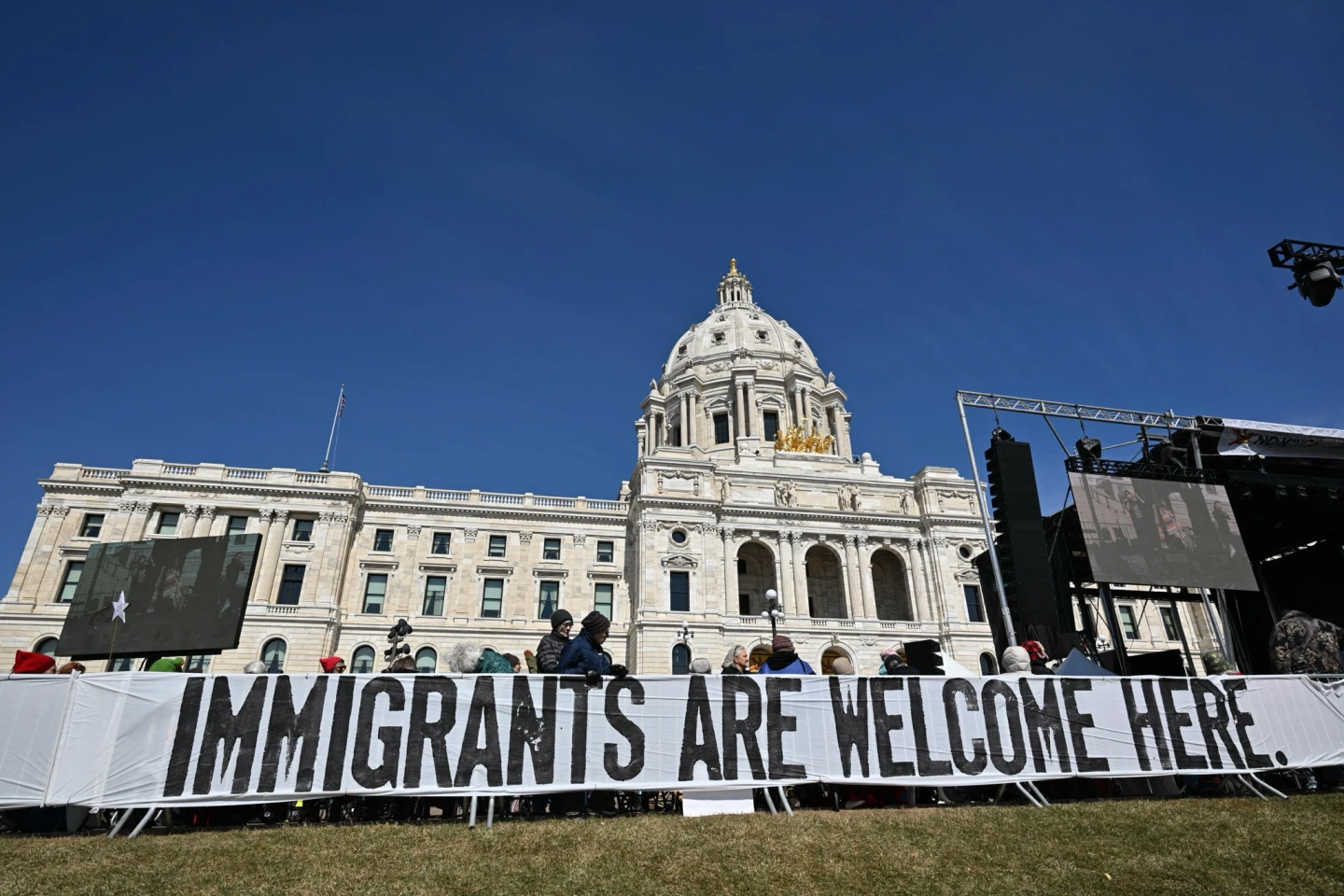
The context surrounding this case unveils a growing dispute between state officials and federal immigration agents over the extent of legal authority and accountability, especially following mass deployments of federal officers across the Minneapolis-St. Paul area for heightened immigration enforcement, which sparked widespread protests and criticism.
As this case unfolds, it may further escalate tensions between the Trump administration’s approach to immigration enforcement and local jurisdiction attempts to regulate federal actions within their boundaries.