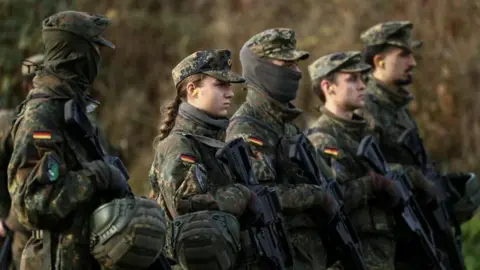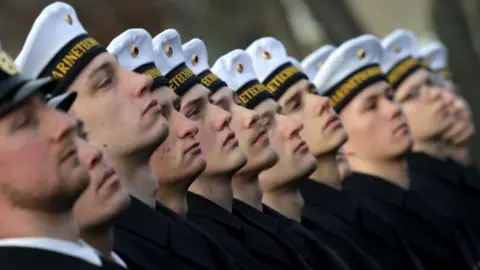
Germany's parliament, the Bundestag, has voted to introduce voluntary military service, in a move aimed at boosting national defences after Russia's full-scale invasion of Ukraine. It marks a significant shift in Germany's approach to its military and follows Chancellor Friedrich Merz's push to create Europe's strongest conventional army.
The change means that all 18-year-olds in Germany will be sent a questionnaire from January 2026 asking if they are interested and willing to join the armed forces. The form will be mandatory for men and voluntary for women.
Students at schools across Germany have said they will join strikes in as many as 90 cities on Friday to protest against the move.
Many young Germans either oppose the new law or are sceptical. We don't want to spend half a year of our lives locked up in barracks, being trained in drill and obedience and learning to kill, the organisers of the protests wrote in a statement posted on social media. War offers no prospects for the future and destroys our livelihoods.
In Hamburg alone, about 1,500 people were expected to join the protests, and school head teachers warned parents not to take their children out of school for the day.
German MPs voted by 323 votes to 272 to back the change, making Germany the latest European country to launch some form of revised military service. The government says military service will be voluntary for as long as possible, but from July 2027, all 18-year-old men will have to take a medical exam to assess their fitness for possible military service.
Germany's armed forces, currently at about 182,000 personnel, aim to increase that number significantly. While the government hopes to maintain a voluntary service, a shift to compulsory draft could be possible should the security situation deteriorate.
The shift comes amid broader concerns about national security and pressure from allies, particularly the United States, for increased military readiness among NATO countries. Surge in military activity and revised laws across Europe point towards a more robust defensive strategy in upcoming years.}
The change means that all 18-year-olds in Germany will be sent a questionnaire from January 2026 asking if they are interested and willing to join the armed forces. The form will be mandatory for men and voluntary for women.
Students at schools across Germany have said they will join strikes in as many as 90 cities on Friday to protest against the move.
Many young Germans either oppose the new law or are sceptical. We don't want to spend half a year of our lives locked up in barracks, being trained in drill and obedience and learning to kill, the organisers of the protests wrote in a statement posted on social media. War offers no prospects for the future and destroys our livelihoods.
In Hamburg alone, about 1,500 people were expected to join the protests, and school head teachers warned parents not to take their children out of school for the day.
German MPs voted by 323 votes to 272 to back the change, making Germany the latest European country to launch some form of revised military service. The government says military service will be voluntary for as long as possible, but from July 2027, all 18-year-old men will have to take a medical exam to assess their fitness for possible military service.
Germany's armed forces, currently at about 182,000 personnel, aim to increase that number significantly. While the government hopes to maintain a voluntary service, a shift to compulsory draft could be possible should the security situation deteriorate.
The shift comes amid broader concerns about national security and pressure from allies, particularly the United States, for increased military readiness among NATO countries. Surge in military activity and revised laws across Europe point towards a more robust defensive strategy in upcoming years.}