In a significant shift in military policy, France announced the return of a limited form of military service, largely influenced by escalating concerns surrounding potential confrontations with Russia. This initiative comes more than 25 years after conscription was dissolved.
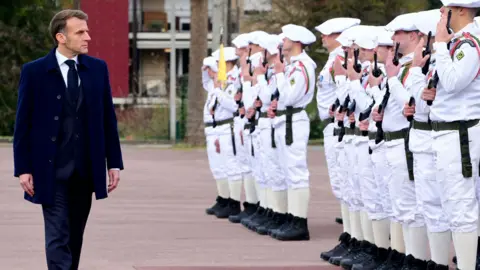
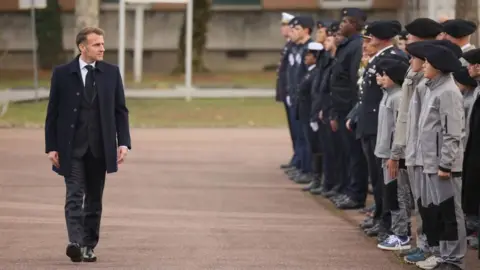
President Emmanuel Macron detailed the plan for young individuals to volunteer for a paid 10-month military training program during his announcement at an infantry base in Varces, near Grenoble. The only way to avoid danger is to prepare for it, Macron asserted, emphasizing the necessity of mobilizing the nation for self-defense.
The voluntary service, targeting primarily those aged 18 and 19, will commence gradually from the summer of next year, with participants set to receive a monthly stipend of at least €800 (£700).
In this uncertain world where might triumphs over right, war is in the present tense, Macron remarked, stressing the urgent need for a robust armed forces supported by motivated young volunteers. Initially, the program will welcome 3,000 new recruits, with aspirations to bulk this number up to 50,000 by 2035.
France's military currently comprises around 200,000 active personnel, complemented by about 47,000 reservists. This new structure aims to create a three-tiered military model integrating professionals, reservists, and ambitious volunteers.
This decision aligns France with other European nations that have implemented similar military recruitment strategies due to fears stemming from Russian hostility. Countries like Belgium and the Netherlands have also launched voluntary military programs, while Germany contemplates a comparable initiative. Meanwhile, other European states like Lithuania and Latvia maintain compulsory service, adding further pressure for defense readiness.
French military leadership supports the reintroduction of service, viewing it as a means to cultivate a pool of trained individuals capable of assisting professional soldiers and undertaking vital non-combat roles. Officials hope to foster lifelong military careers among many of the new recruits.
A survey indicates significant public backing for the measure, with 73% of respondents in favor of voluntary military service, and even a favorable sentiment noted among younger demographics.
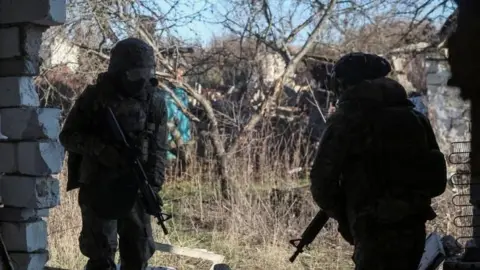
This transition is also spurred by remarks from the new Chief of Defense Staff, General Fabien Mandon, who forecasted a potential military encounter with Russia in the next three to four years, sending ripples through national discussions about military preparedness.
Critics, however, caution that a focus on military training may overlook pressing youth issues such as mental health and employment. Macron's government finds itself redirecting public discourse, ensuring the nation that there are no immediate plans to deploy new service members to active combat zones, particularly concerning the ongoing conflict in Ukraine.
The move to revive military service in France, which was formally dismantled under President Jacques Chirac in 1996, raises questions about long-term funding and resource allocations, even as feelings of national solidarity and preparedness take forefront in the face of geopolitical uncertainties.