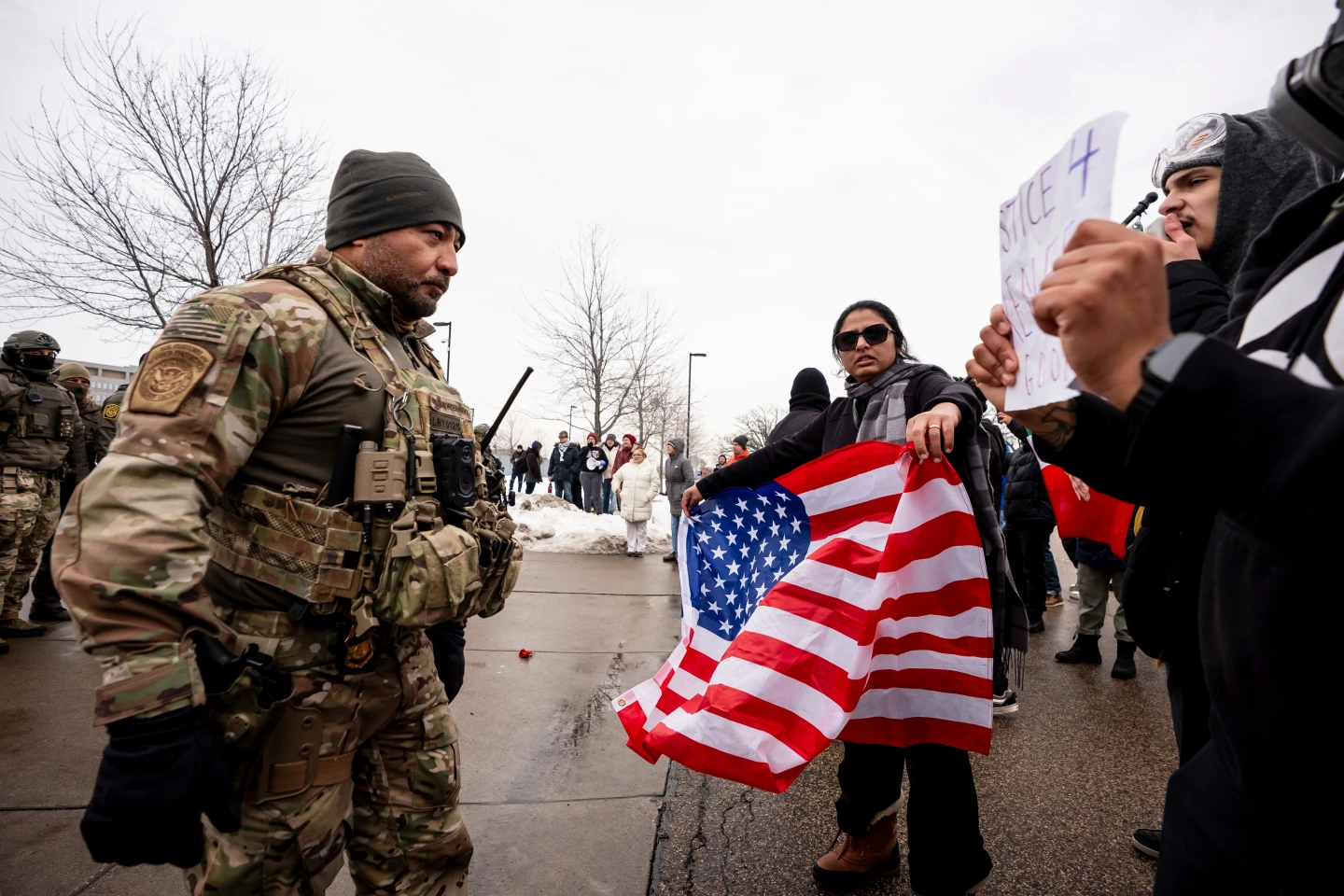
The ongoing tension between state and federal authorities came under scrutiny following a tragic incident in Minneapolis where a federal immigration officer fatally shot a woman, identified as 37-year-old Renee Good. This incident has sparked a complex legal debate about the extent to which federal officers can be held accountable under state law.
The FBI has informed local law enforcement that they may not participate in the investigation, which raises concerns about transparency and public trust. Experts emphasize that the Supremacy Clause typically protects federal workers carrying out federally sanctioned duties, complicating any potential state charges against the officer involved.
Minnesota Governor Tim Walz has openly criticized the federal government's stance, warning that public trust in the investigation's fairness is at stake. He has urged federal officials to allow state investigators more autonomy, emphasizing the importance of maintaining confidence in the judicial process.
Legal analysts note that while the federal agents may claim immunity, this protection is not absolute. Prosecutors will need to demonstrate clear violations of state laws if they wish to pursue charges, as well as evidence that the use of force was excessive under federal standards.
The situation has been exacerbated by claims from federal officials that Minnesota lacks jurisdiction in this investigation. As discussions continue regarding the implications of the lack of cooperation between state and federal investigators, Minnesota Attorney General Keith Ellison has affirmed that the state will seek to conduct its own investigation, despite potential barriers.
Overall, the complex relationship between state and federal law enforcement agencies in this case serves as a critical examination of accountability and jurisdiction in cases involving federal officers and the exercise of their duties.