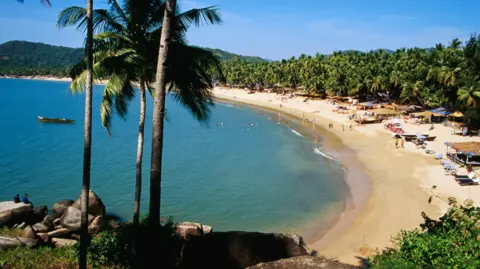
It is just past noon at the crescent-shaped Palolem beach on the southern tip of Goa's long, sandy coastline. The sun is blinding hot, but that has not deterred the tourist hordes from splashing about in the ocean.
The beachside shacks and cheap backpacker hotels hugging the bay in the state often dubbed India's party capital are full with tourists.
What's different here from some years ago, though, is that the Europeans and Russians who once thronged Palolem and other beach villages of Goa are missing.
The crowd is almost all local, a reflection of the diminishing appeal of this tiny coastal state among foreign tourists.
The abundance of domestic visitors, on the other hand, shows that its lure has grown among people from far-flung corners of the country.
Numbers released by Goa's tourism department underscore these trends. Nearly 900,000 foreigners visited the state in 2017. By 2025, the number had fallen to around half a million. The number of domestic tourists, on the other hand, grew from 6.8 million in 2016 to more than 10 million last year.
The state's tourism department recently said that the global geopolitical situation has been affecting overseas flows.
We have to remain both pessimistic and optimistic while planning ahead, Rohan Khaunte, Goa's tourism minister told a local outlet.
But the decline in numbers predates the recent conflict, which begs the question: why are foreign visitors, who've patronised the relaxed budget getaway since the hippie heyday of the 1960s and 1970s, now turning away?
Economics beyond the beaches play a significant role. People are just hard up. There was Covid and then the war [with Ukraine] and now flights are so expensive because of what's happening in the Middle East - so money is definitely a factor, says Sophie, a ballet dancer from Russia who is on her fifth trip here.
Some of my friends are choosing Turkey or Egypt over Goa this year because its closer to home and cheaper.
Rico, who's been visiting for the last 20 years from Newcastle, feels the same way about European visitors. Certainly in my country folks at the moment have a lot less money to go overseas. For the last three-four years they've tended to take more holidays at home, he says.
Concerns extend to logistical challenges too. Some foreign tourists have pointed out that longer visa procedures and higher fees have deterred them from visiting.
Ernest Dias, a committee member at Goa's Department of Tourism, indicates that better tourist options abroad, particularly in Vietnam and Sri Lanka—characterized by lower costs and easier visa processes—are attracting visitors who might once have gone to Goa.
The mix of growing domestic tourism and an evolving MICE economy (meetings, incentives, conferences and exhibitions) has further strained affordable accommodations for foreign tourists, who now face a competitive market.
Despite the emerging challenges, the local government is working to reverse these trends by targeting new markets, including Asia and Africa, to diversify visitors while addressing the persistent cleanliness and infrastructure ISSUES impeding foreign travel.
The pressures of remaining competitive within a rapidly changing tourism landscape underscore how Goa’s enchanting beauty and vibrant culture must be showcased anew to regain the hearts of international travellers.