Prime Minister Mark Carney's new approach to Canada's foreign policy can perhaps be distilled in one line: We take the world as it is, not as we wish it to be.
This was his response when asked about the deal struck with China on Friday, despite concerns over its human rights record and nearly a year after he called China the biggest security threat facing Canada.
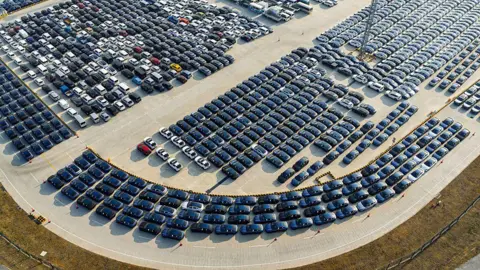
The deal will see Canada ease tariffs on Chinese electric vehicles that it imposed in tandem with the US in 2024. In exchange, China will lower retaliatory tariffs on key Canadian agricultural products.
Experts indicated this policy shift reflects Canada's intent to establish a more autonomous trade stance given the uncertainty in its relationship with the US, its main trading partner. Eric Miller, a Washington DC based trade adviser, explained that Canada is asserting its agency, indicating it will not wait for US directions.
In recent comments, Carney noted, the world has changed and emphasized that the new arrangement sets Canada up for a new world order where its dealings with China are now more predictable than with the US.
However, reactions in Canada were mixed, with figures like Saskatchewan Premier Scott Moe welcoming the news as a relief for local farmers affected by China's previous tariffs. In contrast, Ontario Premier Doug Ford criticized the potential economic impacts on Canada's auto sector, arguing the removal of EV tariffs could stimulate a flood of imported Chinese vehicles without sufficient investment assurances in the Canadian economy.
The deal has adjusted Canada's tariffs on Chinese electric vehicles from 100% to 6.1% on the first 49,000 imported units, with forecasts predicting increased competition for US firms in Canada’s electric vehicle market.
This strategic pivot towards China and the mixed domestic reactions underscore a critical moment in Canada’s trade dynamics, especially against the backdrop of fluctuating relations with the US.