Canada and the United States are close to finalising a high‑profile trade deal, with the Trump administration and Canadian officials calling the negotiations a success.
President Donald Trump said the proposed agreement would welcome U.S. farmers and manufacturers, while Canadian Prime Minister Mark Carney noted it would secure "the best terms" for Canada’s strategic sectors and provide future certainty for U.S.–Canada trade.
Negotiators met on Wednesday for the third consecutive day, after the Trump administration stopped a planned wave of tariffs on Canadian goods. Though the deal was seen as a win, the precise terms remain unclear.
U.S. Trade Representative Jamieson Greer confirmed the U.S. is "very happy" with the latest talks and will brief Congress on the details soon. He highlighted that the agreement would not only protect American workers, jobs, and supply chains but also strengthen the North American economy.
Canadian negotiators camped on the White House lawn for over a week to hammer out the deal. Canada has sought U.S. concessions on steel, aluminium, automobiles and lumber. The U.S. asked for the removal of its remaining retaliatory auto tariffs, adjustments to dairy quotas, and the lifting of the ban on U.S. alcohol sales imposed last year.
A Canadian dairy supply‑management programme—containing production quotas, set pricing and import limits—was confirmed to remain "entirely intact" by Minister Dominic LeBlanc. Polls indicate a majority of Canadians would resist significant concessions to the U.S.; 56% surveyed by Leger said Canada should take a hardline approach.
Both sides, however, urge swift completion, warning that any delay could worsen economic impacts on both countries. The deal’s final confirmation will likely hinge on clarifying tariff reductions, dairy agreements and alcohol trade provisions.
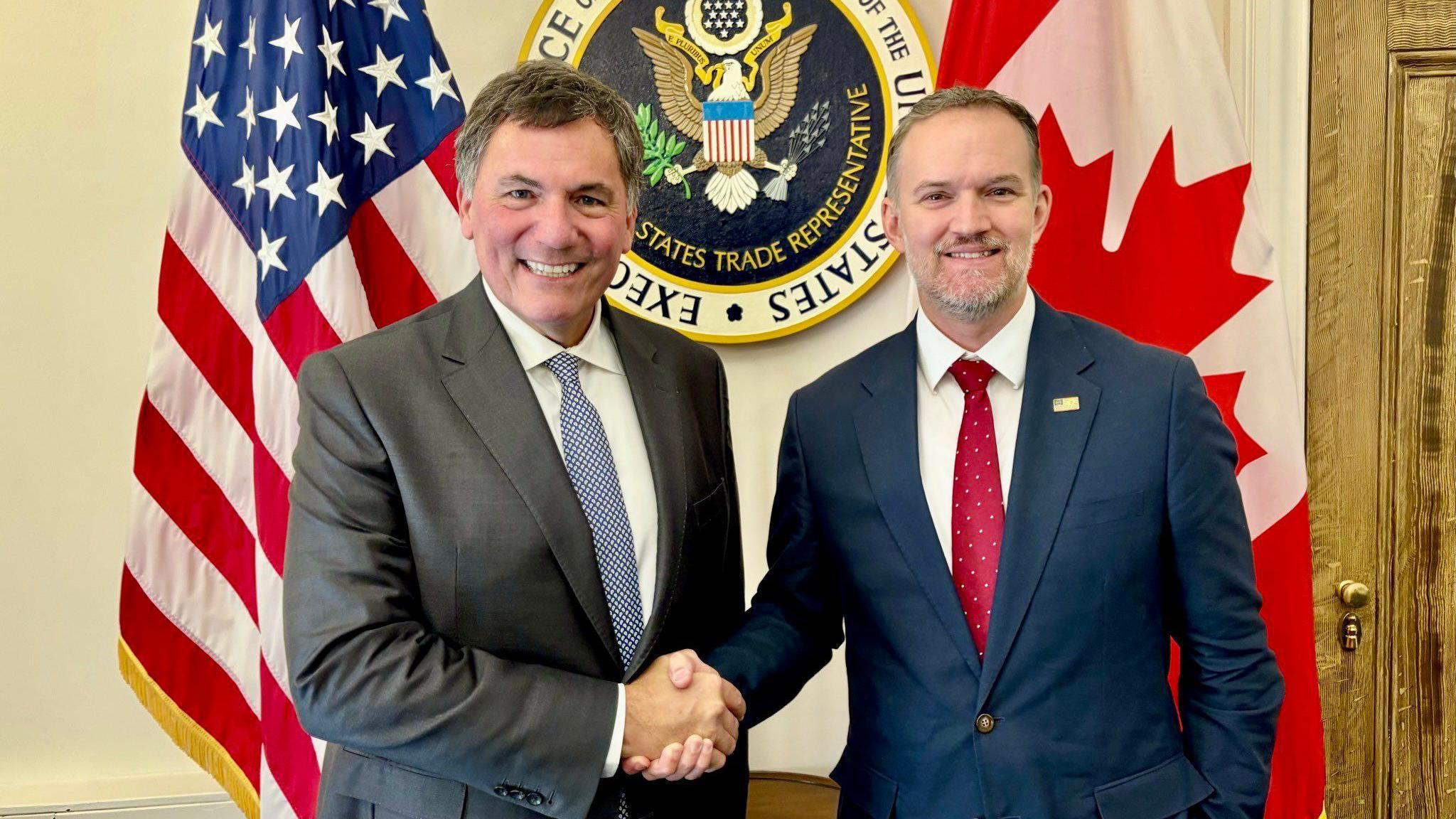
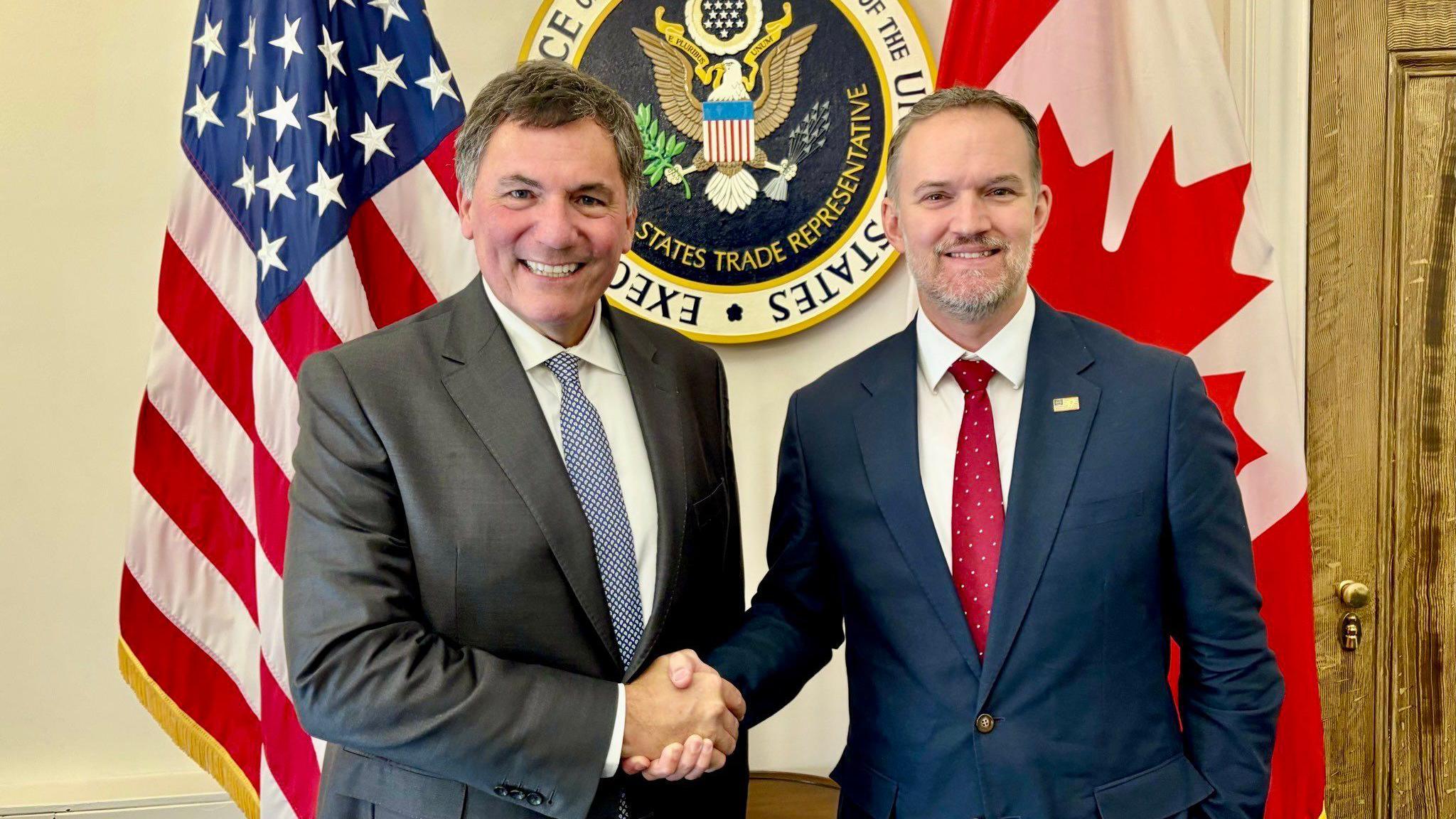
Image: U.S. trade rep Jamieson Greer (right) shakes hands with Canadian minister Dominic LeBlanc (left). U.S. and Canadian flags visible. © DLeBlancNB on X.