In brief
In a recent interview, BlackRock CEO Larry Fink stated that if oil prices climb to $150 per barrel due to ongoing tensions, particularly with Iran, it could trigger a global recession. Fink called for a diversified energy mix and expressed concerns over rising energy costs disproportionately affecting the poor. He also discussed the insights BlackRock has from its substantial investments and rejected claims of an AI bubble, emphasizing the need for practical skills training in response to technological changes.
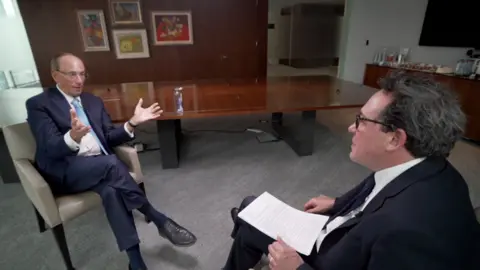
If the price of oil hits $150 a barrel, it will trigger a global recession, the CEO of BlackRock, Larry Fink, warned in a recent BBC interview.
Fink stated that if Iran remains a significant threat and oil prices stay high, the implications for the global economy will be profound. He believes that a persistent rise in oil prices would lead to severe economic challenges for many countries.
In his interview, Fink dismissed the notion of an AI bubble but highlighted a growing investment in technology during a time when more people should focus on technical training rather than university degrees. He noted that BlackRock controls assets worth $14 trillion and its scale provides valuable insights into the global economy's health.
The current conflict in the Middle East has already caused significant volatility in financial markets as analysts and investors grapple with potential changes in energy prices. Fink is cautious but believes that the ultimate outcome of the conflict could lead to either a stabilization of oil prices or prolonged high prices if challenges persist.
He indicated that if the situation improves and Iran is welcomed back into the international community, oil prices could revert to pre-war levels. However, the opposite scenario—high oil prices remaining for years—would trigger economic decline.
Amid rising energy prices, Fink noted the importance of countries reducing reliance on imports by increasing domestic oil and gas production. He advocated for a pragmatic approach to energy sources, emphasizing the necessity of cheap energy to support growth and living standards.
Lastly, he addressed concerns about a return to situations reminiscent of the 2007-08 financial crisis, insisting that today’s financial institutions are much more secure and resilient. Furthermore, he stated that rising energy costs are a regressive tax that burdens the poor more than the wealthy, calling for a more balanced energy strategy that includes investments in renewable energy.