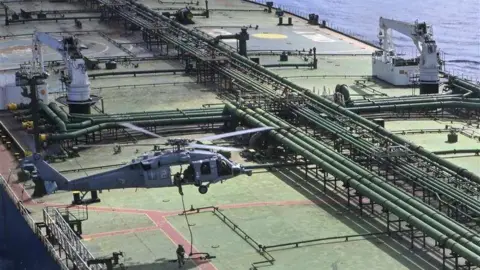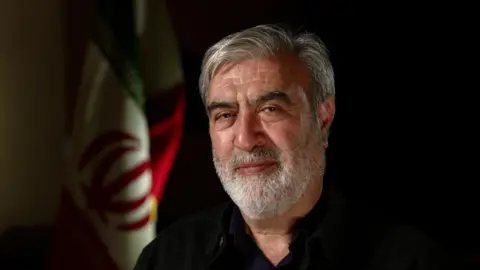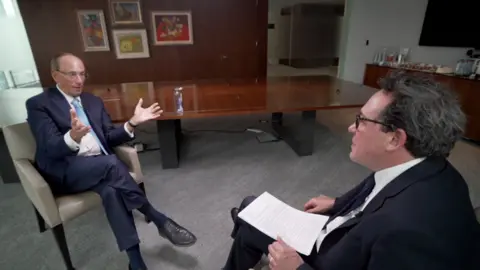
If the price of oil hits $150 a barrel it will trigger a global recession, the boss of US financial giant BlackRock has told the BBC. Larry Fink, who leads the world's largest asset manager, stated that if Iran remains a threat and oil prices stay elevated, it will have profound implications for the global economy.
In an exclusive interview, he downplayed concerns of an AI bubble, noting that the technology's rise has led many to pursue university degrees rather than technical training.
BlackRock manages assets worth $14 trillion, providing Fink with unique insights into the global economy's health. The ongoing conflict in the Middle East has caused volatility in financial markets, prompting investors to evaluate future energy costs.
Fink suggested two possible outcomes of the conflict: If peace is achieved and Iran reenters the global market, oil prices could stabilize; without resolution, prices could remain high, leading to prolonged economic challenges.
Furthermore, he criticized rising energy prices as a regressive tax that heavily affects the poor, emphasizing the necessity for countries to adopt multifaceted energy strategies that include renewables.
Addressing concerns about potential parallels with the 2007-08 financial crisis, Fink affirmed that current financial institutions are in a better position and dismissed the notion of impending financial trauma. He underscores the urgency for the US and Europe to enhance their AI capabilities against fierce competition from China while ensuring affordable energy to support technological advancement.
In an exclusive interview, he downplayed concerns of an AI bubble, noting that the technology's rise has led many to pursue university degrees rather than technical training.
BlackRock manages assets worth $14 trillion, providing Fink with unique insights into the global economy's health. The ongoing conflict in the Middle East has caused volatility in financial markets, prompting investors to evaluate future energy costs.
Fink suggested two possible outcomes of the conflict: If peace is achieved and Iran reenters the global market, oil prices could stabilize; without resolution, prices could remain high, leading to prolonged economic challenges.
Furthermore, he criticized rising energy prices as a regressive tax that heavily affects the poor, emphasizing the necessity for countries to adopt multifaceted energy strategies that include renewables.
Addressing concerns about potential parallels with the 2007-08 financial crisis, Fink affirmed that current financial institutions are in a better position and dismissed the notion of impending financial trauma. He underscores the urgency for the US and Europe to enhance their AI capabilities against fierce competition from China while ensuring affordable energy to support technological advancement.