In brief
The documentary *Mr Nobody Against Putin* highlights an alarming trend in Russian education, where children are subjected to patriotic lessons painting the invasion of Ukraine as a just cause. Despite parental concerns about the impact of such indoctrination, many children find enjoyment in these activities, creating a complex environment where opposing views are hidden for fear of social repercussions.
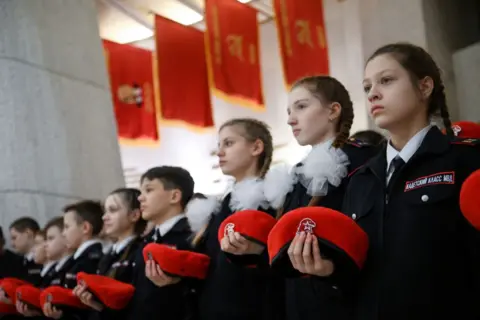
In the wake of increasing patriotic activities in Russian schools, one parent, Nina from Moscow, voiced her apprehensions when her seven-year-old daughter was assigned a poem celebrating Russia's 'glorious army'. Such incidents have become commonplace as the government intensifies its propaganda efforts in education. This situation is poignantly captured in the Oscar-winning documentary *Mr Nobody Against Putin*, which draws on the experiences of Pavel Talankin, a primary school coordinator in the small town of Karabash.Nina struggles to shield her daughter from patriotic programs, yet her daughter enjoys participating, complicating Nina's stance against such indoctrination. She likes her teacher, she likes her classmates - she likes being a part of it, Nina notes. Fearing social isolation, she refrains from openly opposing these activities, illustrating a generational divide where children absorb propaganda as part of their routine school life.The documentary reveals the dramatic shift in school curricula following Russia's invasion of Ukraine in 2022, incorporating flag ceremonies and lessons on state-sanctioned values. Parents like Marina express distress over such education while fearing to express their reluctance in front of their kids.Psychotherapist Anastasia Rubtsova highlights how children, particularly younger ones, are susceptible to authoritative messages, and thus, implanting such narratives could have lasting effects. Despite personal convictions against the war, families often navigate a delicate line of discourse, promoting peaceful conflict resolution while tacitly opposing state narratives.Students like Maia, who voice their dissatisfaction with the discussions, nonetheless feel unprepared to challenge their environment. Reports indicate that patriotic education is not uniformly enacted across schools, creating an unpredictable landscape.As the documentary illustrates, the implications of state-sponsored education in Russia can resemble historical patterns of indoctrination, with long-term effects potentially shaped by both familial influences and the broader social context in which these children grow up.