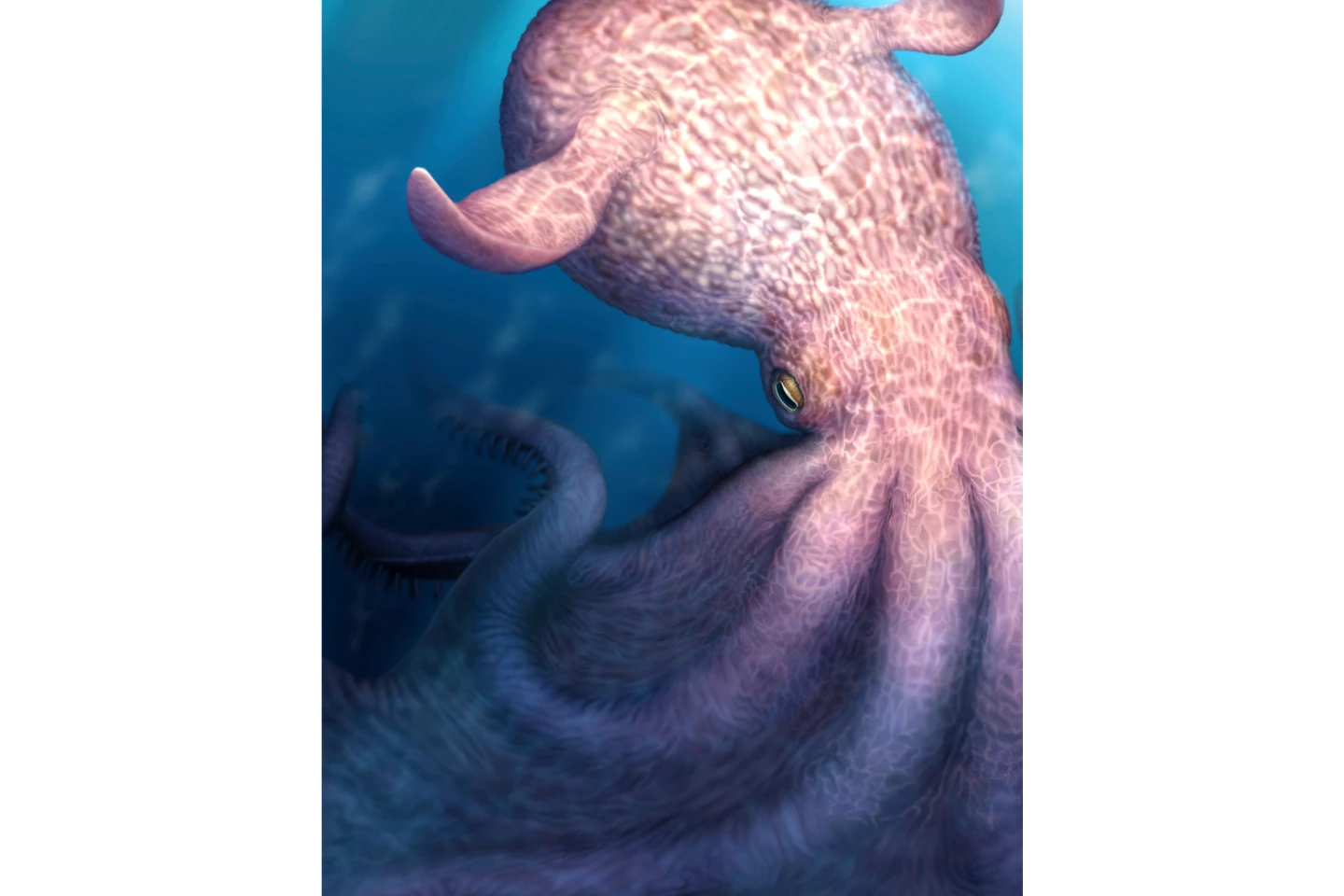
NEW YORK — Recent analyses of ancient octopus fossils have revealed intriguing insights into the marine ecosystems that existed 100 million years ago, during the time of the dinosaurs. Massive, kraken-like octopuses are now believed to have roamed the oceans, equipped with eight arms and long bodies that could extend to over 60 feet.
The study, which examined the jaws of 15 fossilized octopuses found in Japan and Vancouver Island, raises fascinating questions about their role in ancient marine food chains, alongside famous predators like mosasaurs and plesiosaurs. According to paleontologists, these ancient octopuses, often overlooked in discussions about marine predators, could have indeed been among the top hunters of their time.
Despite the softness of their bodies making fossilization difficult, researchers utilized a method called digital fossil mining, allowing them to uncover new jaw fossils that could better estimate the sizes of these creatures. Their findings indicate that ancient octopuses ranged from 23 to 62 feet in length. The largest jaw fossils showed considerable wear, suggesting that they predated on hard-shelled creatures and had the strength to compete with contemporary marine reptiles for food.
“These krakens must have been a fearsome sight to behold,” said Yasuhiro Iba, a paleontologist involved in the research. The findings imply that these ancient predators had not only the physical attributes to hunt effectively but also the behavior to survive in an ecosystem dominated by other formidable species.
While it remains challenging to definitively identify the diet of these octopuses without further fossil evidence, it's hypothesized they could have targeted fish and snails, using their flexible arms and strong beaks to take advantage of various prey types.
The full study was published in the journal Science, prompting further interest in the exploration of additional octopus fossils to better understand the evolutionary significance of these remarkable creatures in ancient seas.