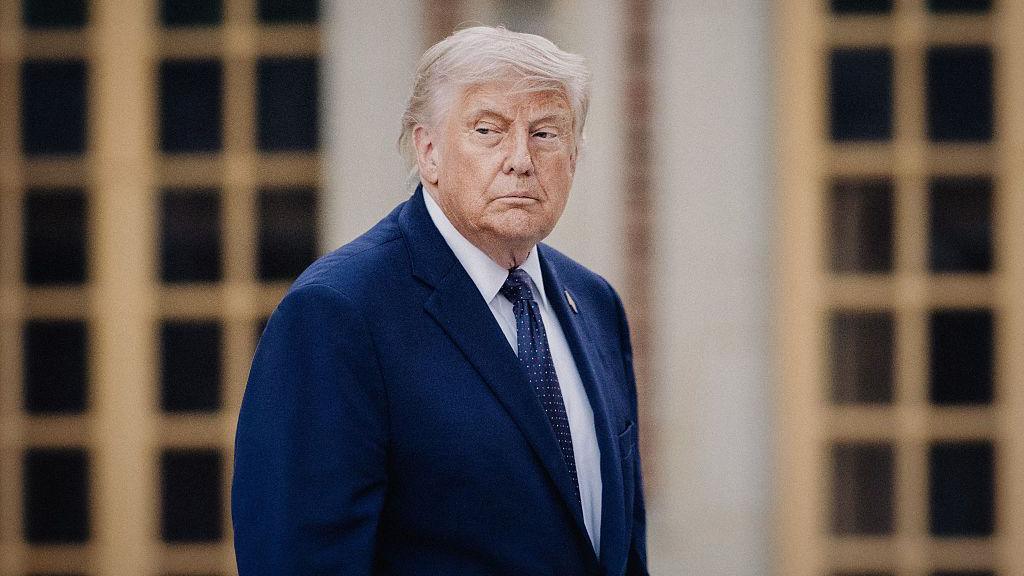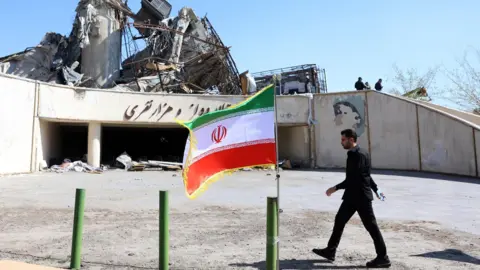
Ordinary Iranians have been responding to US President Donald Trump's threat to destroy Iran's power plants and bridges unless it opens the Strait of Hormuz. Trump said in an expletive-laden post on social media on Sunday that 'Tuesday will be Power Plant Day, and Bridge Day, all wrapped up in one, in Iran. There will be nothing like it!!!' Iranian officials have mocked his 20:00 ET (01:00 BST Wednesday) deadline, with a presidential aide claiming his 'insults and nonsense' are expressions of 'sheer desperation and anger.' The BBC has managed to speak with several Iranians—all opposed to the current establishment—despite difficulties in communication due to an internet blackout imposed by authorities over five weeks ago.
One Tehran resident, Kasra, in his twenties, lamented, It feels like we're sinking deeper into a swamp. What can we do as ordinary people? We can't do anything. We can't stop him [Trump]. I keep thinking about a scenario where, in a month, I'm sitting with my family with no water, no electricity, nothing. And someone blows out the candle and we go to sleep. While state media displays images of stocked grocery stores, many people respond by stockpiling essentials, with widespread fears regarding possible disruptions of water supplies.
Mina, another Tehranian, shared, My mum is filling every bottle she can find in the house with water. The sentiment echoes frustrations towards Trump's threats, stirring animosity towards him among a populace that feels increasingly voiceless.
Despite some initial hopes regarding foreign intervention during protests, those sentiments have shifted. Many now view attacks on energy infrastructure as a red line. In tragic irony, while some citizens acknowledged thankful feelings over early strikes, they warn such actions only serve to empower the Iranian regime.
As they grapple with fear and uncertainty, the economic impact of heightened tensions is palpable. Several individuals discussed job loss and financial strain, with rising rent prices sparking further distress. As access to the internet remains elusive and costly for many—a further blow to their ability to connect and organize—the situation reveals the duality of despair and resilience among the Iranian people as they navigate profound crises both within and imposed from outside.
One Tehran resident, Kasra, in his twenties, lamented, It feels like we're sinking deeper into a swamp. What can we do as ordinary people? We can't do anything. We can't stop him [Trump]. I keep thinking about a scenario where, in a month, I'm sitting with my family with no water, no electricity, nothing. And someone blows out the candle and we go to sleep. While state media displays images of stocked grocery stores, many people respond by stockpiling essentials, with widespread fears regarding possible disruptions of water supplies.
Mina, another Tehranian, shared, My mum is filling every bottle she can find in the house with water. The sentiment echoes frustrations towards Trump's threats, stirring animosity towards him among a populace that feels increasingly voiceless.
Despite some initial hopes regarding foreign intervention during protests, those sentiments have shifted. Many now view attacks on energy infrastructure as a red line. In tragic irony, while some citizens acknowledged thankful feelings over early strikes, they warn such actions only serve to empower the Iranian regime.
As they grapple with fear and uncertainty, the economic impact of heightened tensions is palpable. Several individuals discussed job loss and financial strain, with rising rent prices sparking further distress. As access to the internet remains elusive and costly for many—a further blow to their ability to connect and organize—the situation reveals the duality of despair and resilience among the Iranian people as they navigate profound crises both within and imposed from outside.