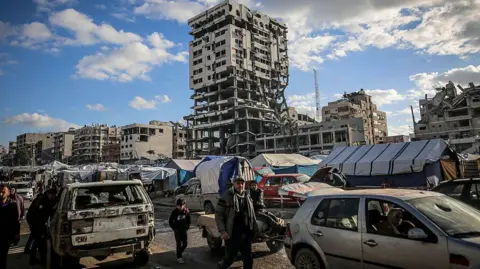
The U.S. government has granted a temporary exemption to Proximity International, a contractor overseeing local police training at the Al Hol camp in northeastern Syria, allowing them to continue operations aimed at curbing the influence of ISIS. This camp, which currently accommodates approximately 39,000 individuals linked to the jihadist group, has become a focal point for concerns surrounding potential ISIS resurgence amid evolving political dynamics in the region post-Bashar al-Assad’s regime.
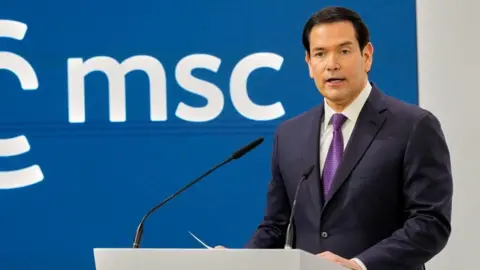
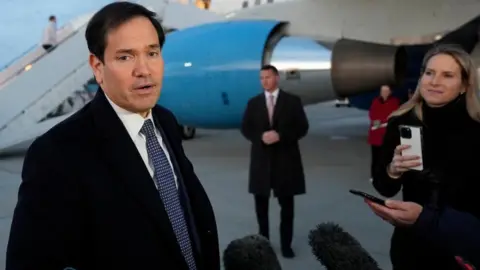
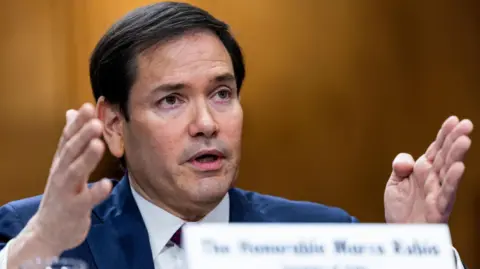
Last week, Secretary of State Marco Rubio implemented a funding freeze for all foreign aid programs for a period of 90 days to assess the efficiency of U.S. expenditures in various initiatives. However, Proximity International articulated the necessity of their operations, asserting that the maintenance of security within Al Hol is crucial not only for local stability but also for the overall safety of the United States. The firm had previously been forced to pause its work after the funding freeze directive.
Al Hol has been increasingly recognized as a breeding ground for potential radicalization and recruitment by ISIS. U.S. military personnel continue to operate in the vicinity, supporting the Kurdish-led Syrian Democratic Forces in their ongoing campaign against the remnants of the Islamic State. Maintaining security in Al Hol is therefore pivotal to mitigating threats both locally and abroad.
In a statement regarding the funding freeze, Rubio emphasized the importance of scrutinizing every dollar allocated towards foreign aid, questioning whether such expenditures directly contribute towards making America safer, stronger, and more prosperous. In light of these considerations, the waiver granted to Proximity International reflects a strategic acknowledgment by the Trump administration of the immediate need to address the complex security scenario at Al Hol while navigating broader foreign policy imperatives in the region.
Last week, Secretary of State Marco Rubio implemented a funding freeze for all foreign aid programs for a period of 90 days to assess the efficiency of U.S. expenditures in various initiatives. However, Proximity International articulated the necessity of their operations, asserting that the maintenance of security within Al Hol is crucial not only for local stability but also for the overall safety of the United States. The firm had previously been forced to pause its work after the funding freeze directive.
Al Hol has been increasingly recognized as a breeding ground for potential radicalization and recruitment by ISIS. U.S. military personnel continue to operate in the vicinity, supporting the Kurdish-led Syrian Democratic Forces in their ongoing campaign against the remnants of the Islamic State. Maintaining security in Al Hol is therefore pivotal to mitigating threats both locally and abroad.
In a statement regarding the funding freeze, Rubio emphasized the importance of scrutinizing every dollar allocated towards foreign aid, questioning whether such expenditures directly contribute towards making America safer, stronger, and more prosperous. In light of these considerations, the waiver granted to Proximity International reflects a strategic acknowledgment by the Trump administration of the immediate need to address the complex security scenario at Al Hol while navigating broader foreign policy imperatives in the region.