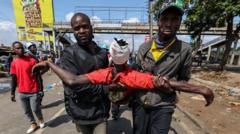
Kenya's police have come under fire for their response to protests that erupted over increasing police violence and dissatisfaction with government policies. A recent report from the Independent Policing Oversight Authority (Ipoa) shows that "disproportionate force" was employed by law enforcement officers during demonstrations, resulting in 65 deaths.
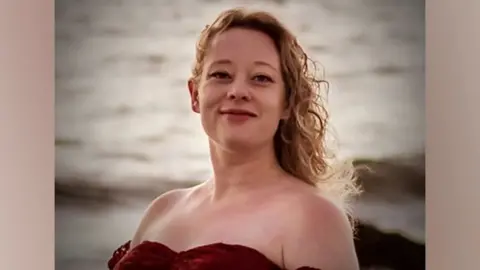
The Ipoa's findings, presented on Thursday, attributed many of the fatalities to police actions amid a wave of protests over the course of six weeks, which consisted of four major protest days. The troubles began on June 12 after the death of Albert Ojwang, a young teacher and blogger, who the police initially claimed died from self-inflicted injuries. In response to public outcry, three police officers face murder charges in relation to his death.
On June 17, another protest saw street vendor Boniface Kariuki shot at close range, ultimately leading to his demise, with an officer charged in connection to the incident. A subsequent protest on June 23, marking one year since protest activity related to tax increases, saw significant violence escalate further, culminating in the tragic events of July 7, during which 41 individuals lost their lives.
In total, reports indicated that 342 civilians were injured, alongside 171 police officers hurt, amid acts of looting and destruction affecting businesses and government properties during these protests. The Ipoa highlighted numerous violations of constitutional policing standards, criticizing the lack of professionalism and failure to uphold public rights.
A police spokesperson refrained from commenting on the Ipoa's report, suggesting that the violence was precipitated by "criminals" and "anarchists," as stated in an official Interior Ministry release. President William Ruto has called for a controversial approach to dealing with demonstrators, ordering officers to shoot protesters in the legs to incapacitate them rather than kill them.
Interior Minister Kipchumba Murkomen previously rejected claims of excessive force, labelling the protests as a "disguised terrorism." Human rights organizations condemn these government actions, alleging that the state has allowed and even encouraged deadly methods used against demonstrators, urging for an urgent reevaluation of police tactics and accountability structures.