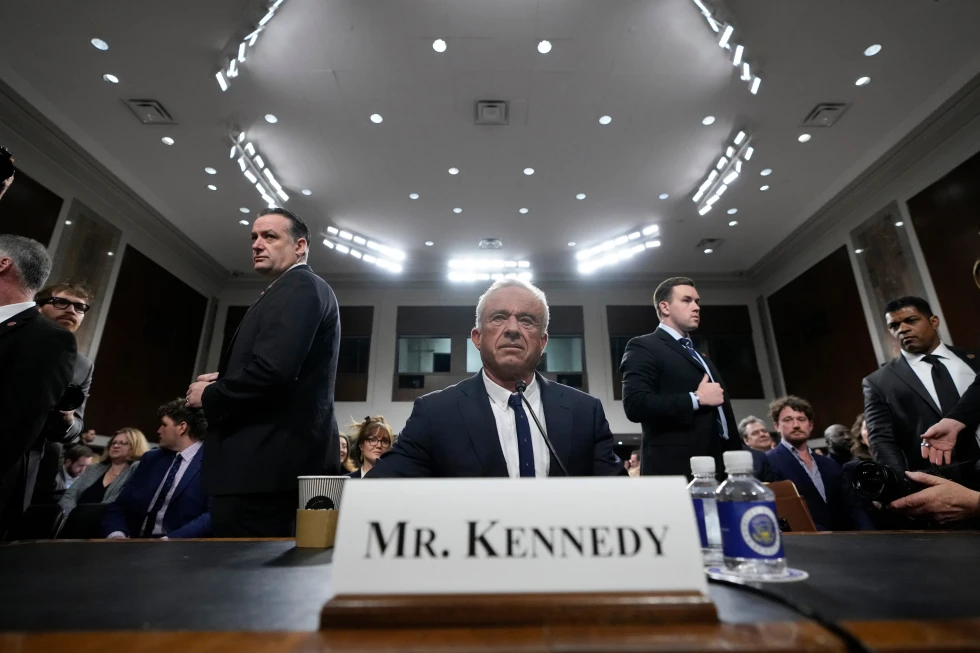
US President Donald Trump has attracted condemnation from health experts after suggesting there is a link between the widely used painkiller Tylenol and autism. Accompanied by his Health Secretary Robert F Kennedy Jr, Trump declared that doctors may soon be advised against recommending the drug, also known as paracetamol, to pregnant women.
Medical experts have labeled these claims as unfounded. The American College of Obstetricians and Gynecologists remarked that the announcement was unsettling, lacking any basis in reliable data. The UK's National Autism Society called Trump's statement dangerous, anti-science, and irresponsible. BBC Verify examined the allegations made by Trump and Kennedy during their news conference at the White House.
Is Trump Correct That US Autism Diagnoses Are Rising?
During the press event, Trump asserted that autism diagnoses in the US have surged over the past two decades, claiming that the incidence rate has increased from one in 10,000 eighteen years ago to one in 31 by 2025. The latter statistic is accurate, with the CDC reporting that approximately one in 31 eight-year-olds were diagnosed with autism in 2022.
However, Trump's claim about the rates rising from one in 10,000 lacks substantiation; the CDC indicated the rate was one in 110 in 2006 and one in 88 in 2008. Most experts attribute rising autism rates more to changes in diagnostic criteria and increased awareness rather than a true surge in cases.
Concerns About MMR Vaccine Recommendations
Trump also questioned the practice of administering the combined mumps, measles, and rubella (MMR) vaccine, suggesting they should be given separately due to supposed issues when mixed.
Experts fear that such claims could deter parents from vaccinating their children, risking the return of preventable diseases like measles. The link between vaccines and autism has been discredited, with multiple studies confirming no connection, including a significant Danish study involving over 657,000 children.
Autism Rates Among the Amish
Claiming that the Amish community has “virtually no autism,” Trump suggested their low Tylenol use could explain this phenomenon. Research on autism within the Amish is limited, and while some studies found relatively low reported cases, experts argue this is likely due to underdiagnosis rather than a lack of cases.
Overall, Trump's allegations regarding Tylenol and autism have been widely criticized as misinformation, lacking credible evidence to support his claims. Health professionals urge for adherence to established vaccine guidelines to protect public health.