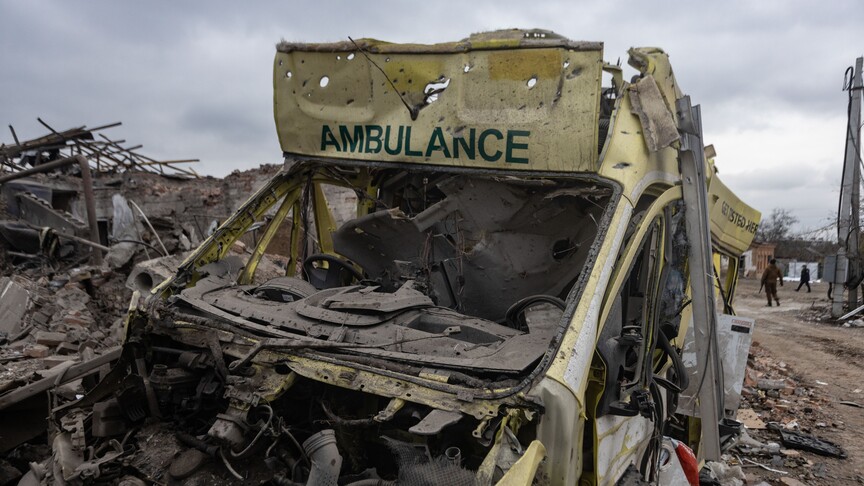
Three workers died, 14 were injured and 10 remained trapped under rubble after a massive explosion ripped through the HABAS iron and steel plant in the Aliaga district of Izmir on Monday. Local authorities reported the blast occurred at approximately 12:00 p.m. local time, and the ensuing search and rescue operation is still underway.
The explosion was said to have been triggered when a ceiling crane snapped and plunged into an arc furnace during a liquid steel casting process, according to a statement from the Izmir Governor’s Office. The statement added that the blast “actually happened when a ceiling crane moved into the furnace and the force shattered the roof, leading to a catastrophic rupture of the equipment.”
Accordingly, the governor’s office released the following quoted summary: “According to initial findings, three of our citizens have lost their lives, and a total of 14 citizens have been injured, three of whom are in critical condition.” The injured were transported to local hospitals for treatment, and the rescuers are working continuously to reach the ten workers trapped beneath the collapsed structures.
Turkish Interior Minister Mustafa Ciftci posted on social media that state units were rapidly deployed to the scene and that firefighting, rescue and medical operations are underway without interruption. He also pledged that a comprehensive investigation has already been launched to determine the root cause of the incident and that the relevant authorities would hold those responsible accountable.
Because the plant’s interior infrastructure and safety procedures are largely opaque to the public, questions have surfaced regarding the adequacy of the facility’s maintenance schedule, the qualifications of its operators and the regulation of heavy machinery in industrial zones. The Local Governor’s Office has said it will cooperate with the Turkish Energy and Industry Ministry on the investigation, but has not yet announced any immediate actions or identified fault lines beyond the crane failure.
During the same day, a news outlet from the Peterborough Examiner repeated the official figures and noted that the explosion’s timing—right in the middle of the steel company’s daily casting schedule—had caught workers by surprise, leading to the injuries and entrapments. The Examiner, while acknowledging the limited independent information available, followed Xinhua’s lead by describing the event as “the most significant industrial accident in western Turkey this year.”
Prior to the explosion, the HABAS plant had been cited in 2025 for repeated safety violations, allegedly related to outdated crane systems and lack of routine inspections. However, the company’s statement, not yet released, has not commented on the allegations or the current investigation, leaving a gap that analysts say could lead to delays in providing a definitive report.
The search and rescue crews have become interested in the chain of command that led to the crane’s movement into the furnace zone. Industrial safety experts highlighted the potential for a missing safety interlock system—an electronic fail‑safe that prevents cranes from approaching critical machinery when it is active. Without these safeguards, a crane operator’s misjudgement could cause exactly the type of accident witnessed at the HABAS plant.
Shortly after Xinhua’s release, local newspapers reported that the plant’s emergency alarm was triggered in the first minutes of the blast but “the alarm failed to override the crane’s swing.” This claim aligns with other industry insiders who say the plant’s emergency protocols were not sufficiently integrated with its crane controls, a design flaw that may have amplified the disaster.
In the days following the explosion, both Turkish authorities and industry analysts are poised to examine whether national regulations around steel plant safety have been effectively enforced. Industry body representatives are calling for a review of the licensing procedures that allowed the HABAS plant to operate with obsolete equipment. The local mayor of Aliaga has asked for a public hearing before a full investigation can be concluded, citing concerns that the owners may shield themselves from responsibility.
Meanwhile, the rescue teams continue to dig through the debris in hopes of bringing those still trapped to safety. The plant’s power supply, having been cut off immediately after the explosion, remains de facto isolated, limiting firefighting equipment and communication capabilities. Emergency crews have therefore requested additional water pumps and power backups from the municipal government.
The ongoing investigation brings to the surface larger questions about industrial safety standards in Turkey. Until an official report is published, the full cost of the incident—both human and economic—is yet to be determined. Stakeholders are awaiting results to learn whether procedural failures, equipment degradation, or oversight gaps are to blame, and what systemic changes are necessary to prevent a repeat tragedy.