In brief
As the Trump administration moves forward with significant budget cuts, the United States Agency for International Development (USAID) faces unprecedented staffing reductions.
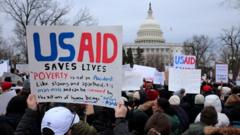
The future of America's foreign aid agency is in jeopardy as the Trump administration prepares to implement a plan that may cut staffing levels drastically from around 10,000 to less than 300 worldwide. An official announcement indicated that almost all non-essential staff at USAID will be put on administrative leave after midnight Friday, impacting thousands of employees stationed abroad. This decision is part of efforts to reduce government spending, a hallmark of Trump’s presidency, and criticism from advisers like Elon Musk has fueled this comprehensive overhaul. In an online notification, the agency communicated plans for return travel and the phasing out of non-essential contractors, with only a small number of 294 staff members considered essential. This move aligns with growing skepticism among the American public regarding foreign aid, as opinions highlighted in a recent AP-NORC poll show that many, especially within the Republican party, feel the country is overspending on international assistance. The drastic actions have drawn ire from former USAID leaders who argue that such cutbacks send detrimental signals about America's reliability in humanitarian efforts worldwide. Gayle Smith, a former chief, highlighted the risks involved when the U.S. retracts its support in times of global crises, emphasizing how essential aid is to numerous vulnerable populations. Amid this push for reductions, the American Foreign Service Association (AFSA) has announced a legal challenge against the administration's course of action. Clauses in the AGT point to violations of the U.S. Constitution and federal laws, contending that Congress alone holds the authority to dismantle such agencies. The lawsuit specifically calls for reinstating essential services and staffing, as well as protecting the roles crucial to national security and humanitarian goals.The adverse effects of these proposed cuts have already been felt globally, especially in nations dependent on U.S. aid for public health and welfare initiatives. Concerns have been voiced by organizations, like the NGO tackling HIV in Kenya, where funding freezes have triggered layoffs and threatened the provision of critical health services, generating fear and uncertainty among beneficiaries.While Secretary of State Marco Rubio reassured around 200 agency staff in Guatemala that the U.S. commitment to foreign aid remains steadfast, he acknowledged the impending focus on aligning aid with U.S. priorities. The administration insists that it aims to continue supporting international programs while emphasizing the need for accountability and justification for U.S. taxpayer funds. As the turbulent dynamics within USAID unfold, the legal challenges and critiques from various quarters serve as a potent reminder of the essential role this agency plays in global humanitarian efforts. The outcome of this situation may have far-reaching implications for both U.S. foreign policy and humanitarian assistance worldwide.