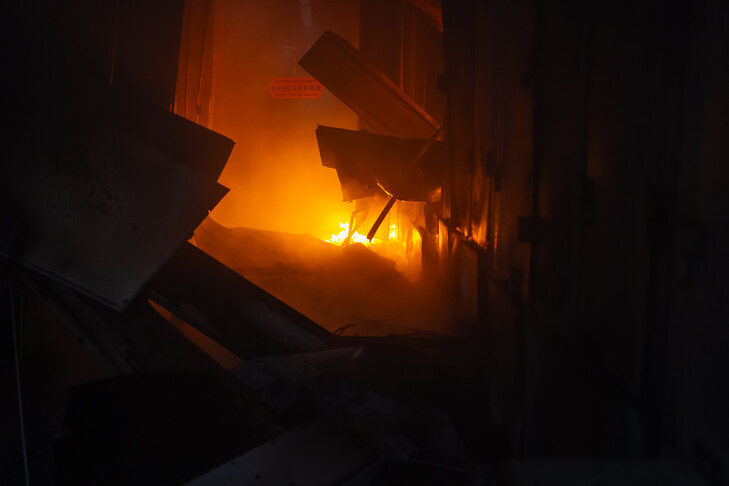
On the night of Monday, November 3, Moscow’s Defence Ministry announced that Russian forces had launched a precision strike on Ukrainian energy facilities that are linked to military‑industrial enterprises. The attack, carried out with guided munitions and attack drones, reportedly targeted four thermal power plants, several substations, port infrastructure in Odessa, and two bulk carriers carrying dual‑use cargo in the Black Sea.
The Russian statement, issued through a spokesperson named Huaxia, said the strike was designed to weaken Ukraine’s military-industrial complex by cutting the electricity that powers factories and equipment manufacturing sites. It also claimed the operation was “precision‑guided” and “well‑planned,” and that it would disrupt Ukraine’s capacity to sustain its war effort.
Targets and Impact
The Defence Ministry’s report identified the prime targets as energy installations that supply power to Ukrainian military-industrial plants in the Vinnytsia, Dnepropetrovsk and Kharkov regions. Four thermal power plants were struck, along with several sub‑stations that feed the national grid. In addition, the Ministry named port facilities in the Odessa region as a key objective, noting that a strategic harbor on the Black Sea was hit as part of the attack.
Two bulk carriers—both flagged in the Black Sea—were also reported to have been damaged. The vessels were said to be transporting military and dual‑use cargo, implying the Russian strike also aimed to cripple the movement of materiel in the maritime domain.
Ukrainian local authorities in Zhytomyr, Kharkiv, Kyiv and Dnipro regions responded by reporting a range of disruptions. About 130 settlements in the Zhytomyr region lost power entirely, causing a cessation of heating services during a cold spell. Kharkiv authorities described a suspension of public electronic transport, a halt to heating, and outages in residential and industrial districts. Kyiv’s city officials noted significant power cuts in several districts, while Dnipro authorities confirmed that the blackout extended to parts of the city’s industrial zone.
Ukrainian Response and Civilian Impact
Ukrainian officials responded by condemning the attack as a violation of international law and a war crime. While the Ministry of Internal Affairs has not released a formal statement at the time of writing, regional authorities have taken emergency measures to restore electricity and heating in the most severely affected areas. Citizens in affected settlements have reported that emergency generators are running at full capacity, but power availability remains intermittent as repairs continue.
Amid the chaos, reports—primarily filtered through social media posts validated by local sources—indicate that the blackout has forced schools and hospitals to shift to backup power systems. A spokesperson for the Ministry of Health in the Kharkiv region expressed concern over medical services being disrupted, but stated that essential supplies were being maintained through alternative arrangements.
Strategic Context and Open Questions
Strategically, the Russian Defence Ministry’s strike represents a continuation of a tactic that links energy infrastructure to the war economy. By targeting facilities that feed military‑industrial enterprises, Moscow seeks to erode the supply of munitions and equipment. The inclusion of port facilities and bulk carriers suggests a broader aim to interdict logistics, limiting not only production but also the distribution of critical cargo.
Ukrainian leadership has reiterated that the energy grid is essential not only for civilian life but also for national defence. They have called for international assistance to rebuild the damaged facilities, citing the importance of maintaining energy resilience amid ongoing attacks. The Ministry of Energy released a statement urging the United Nations and allied governments to support repairs and to supply spare parts and skilled technicians for reconstruction.
Several open questions persist. First, the exact scale of damage to the power plants and substations remains unquantified; Ukrainian officials have not yet confirmed how many operational units are shut down. Second, the fate of the damaged bulk carriers—whether they were abandoned, sunk, or awaiting repairs—has not been clarified by Russian or Ukrainian maritime authorities. Third, the impact on Ukraine’s broader logistical network, particularly how the loss of port infrastructure in Odessa affects cargo movements, is still being assessed.
Analysts from the Institute for Defence Studies in Kyiv have highlighted that damage to thermal power plants may significantly reduce the country’s electricity output—potentially cutting 30% of total supply—though they caution that backup generation units may compensate for short‑term losses. Ukrainian intelligence experts speculate that the strike could also disrupt the power supply to several key missile production sites until repairs are completed.
The Russian Defence Ministry intends to carry out further “precision attacks” targeting strategic infrastructure, as indicated in a recent official communiqué. Ukrainian officials have called this a “calculated escalation, designed to sow chaos and drain resources.”
In the aftermath of the night’s attack, residents in Zhytomyr and Kharkiv are left to cope with the loss of heating and power as the cold season sets in. Meanwhile, the Ukrainian government is mobilizing repair crews and seeking international aid to restore electricity and safe transportation routes. The effectiveness and long‑term consequences of the strike will unfold over the coming weeks, as repair efforts take hold and the conflict intensifies on both sides.