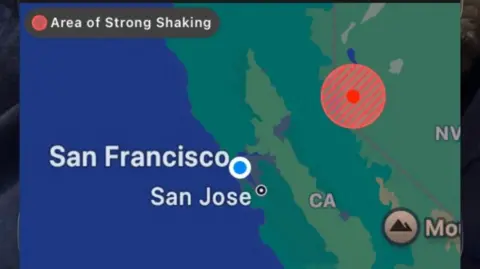
A strong 7.0 magnitude earthquake struck off the northern California coast, as reported by the US Geological Survey. Initially, a tsunami warning was issued for residents along northern California and southern Oregon, covering an area of approximately 4.7 million people, but it was later rescinded.
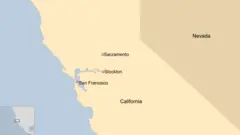
The epicenter of the earthquake was located near Ferndale, California, a small city in Humboldt County, approximately 260 miles (418km) north of San Francisco. Thankfully, local authorities reported no fatalities or significant widespread damage following the quake. This incident is notable as it is one of only nine earthquakes of this magnitude that have occurred globally this year.
According to the Humboldt County Sheriff's Office, while no catastrophic destruction was noted, some homes sustained minor damage. Residents reported items falling off shelves and power outages, with over 10,000 individuals left without electricity in Humboldt County post-quake, as per poweroutage.us.
One Ferndale resident described the scene inside her building, stating it looked "like a bomb has gone off in every room." Olivia Cobian, the innkeeper at Gingerbread Mansion Inn, recounted significant disarray, saying that large cast iron fireplaces had been moved and everything was in disarray post-quake. Another resident, Todd Dunaway, who was dining at home in Fortuna, remarked that it "literally felt like standing on a giant waterbed," and noted the cacophony of rattling windows and falling dishes added to the intensity of the experience.
After the earthquake struck around 10:44 local time (18:44 GMT), several aftershocks followed. Some coastal cities, including Berkeley, issued evacuation orders due to the prospect of a tsunami, urging residents to "EVACUATE NOW," as the warning indicated imminent danger from the tsunami.
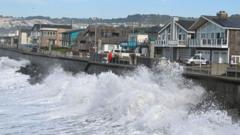
Kayla Aihara, a hotel guest in Half Moon Bay, recounted receiving alerts to evacuate to higher ground before the tsunami warning was called off. Residents were seen closer to the shoreline to observe the waves, waiting anxiously for any sign of an impending tsunami.
California Governor Gavin Newsom was briefed about the quake and engaged with state emergency officials to coordinate an appropriate response. He subsequently declared a state of emergency in order to mobilize resources for recovery. “This earthquake serves as a reminder of the state we live in and the mindset required for daily life here in California,” he stated.
In preparation for such seismic events, signage along California’s coastlines outline tsunami hazards and indicate evacuation routes leading to higher ground. Locals are advised to familiarize themselves with these routes and maintain readiness for rapid evacuation, given the potential for a tsunami to strike within 5 to 10 minutes after a significant earthquake.
California is situated on a tectonic plate intersection, making it susceptible to tremors. Although a powerful 7.0 magnitude earthquake isn't a common occurrence in this region, experts indicate that only around 10 to 15 earthquakes at this level happen worldwide each year. The US Geological Survey typically tracks around 20,000 earthquakes annually, averaging about 55 each day.
With a history of lethal earthquakes, including the notorious 1994 Northridge earthquake, which caused extensive damage and loss of life, today's quake reinforces the importance of preparedness among residents living along the California coastline.