In brief
Israeli election on Oct. 28 concluded with Netanyahu's bloc holding 53 seats and opposition 48, leaving a 120‑seat Knesset without a majority. The Arab bloc won a record 19 seats amid a record 77.7% turnout. Uncertainty over coalition negotiations has triggered a sharp fall in Israeli stocks and weakened the shekel, with market analysts warning of lasting political instability.
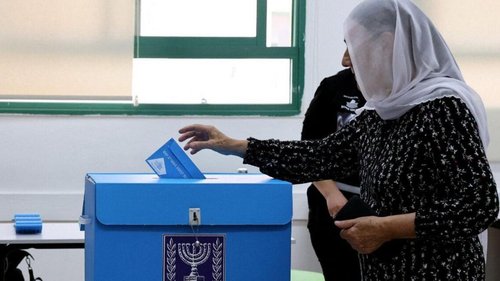
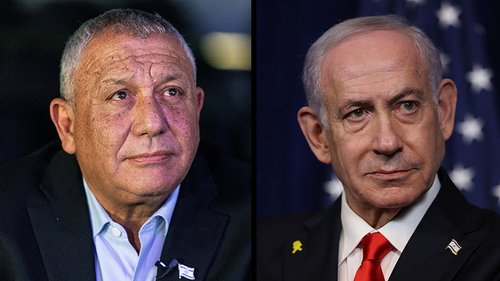
No clear majority emerged from Israel’s 2026 parliamentary vote held on Oct. 28, as preliminary tallies from the Central Elections Committee show Benjamin Netanyahu’s right‑wing bloc winning 53 seats, a 48‑seat opposition led by former chief of staff Gadi Eisenkot, and an Arab bloc poised to take a record 19 seats in the 120‑seat Knesset. The outcome leaves both major coalitions short of the 61 seats needed for a governing majority, and double‑envelope ballots – used to check for fraud – are expected to complete by Thursday.
Turnout reached 77.7% of the 7.3 million eligible voters, the highest since the 1999 election. With nearly 80% of votes counted, Netanyahu’s bloc had already collected 54 seats, while Eisenkot’s coalition tallied 49. The Arab bloc’s 19 seats – 12 for the Joint List and 7 for Ra’am – eclipses the previous peak of 15 seats that the Arab parties secured in 2020, according to United Press International. The record shows a growing engagement among Arab citizens, whose turnout was estimated at about 80% and was cited by Al Jazeera as a response to the implicated hard‑right policies of the outgoing government.
On social media, Gadi Eisenkot accused the Likud‑led bloc of “complete distrust in Netanyahu and the government of Oct. 7,” adding that the results were a “victory for the statist‑Zionist majority in Israel.” Formally, the statement was posted by Eisenkot on his official channel, as reported by UPI.
Eisenkot said: “The preliminary poll results point to complete distrust in Netanyahu and the government of Oct. 7, of the Zionist majority and the majority of Israeli citizens, If these are the final results, this is a victory for the statist‑Zionist majority in Israel.”
Netanyahu, speaking to supporters at a rally in Tel Aviv, called Likud “the largest party in Israel” and said his right‑wing coalition was “the decision among the Jewish and Zionist public.” He urged that a strong, right‑wing national government be established, according to a UPI report of his remarks.
Netanyahu told supporters that his right‑wing bloc held a decisive majority among the Jewish and Zionist public, and called Likud “the largest party in Israel.” “We must establish a strong, right‑wing, national government,” he said.
Economic fallout amid political uncertainty
The Tel Aviv Stock Exchange fell sharply on Wednesday, with the benchmark TA-35 index down 1.81% and the broader TA‑125 index slipping 2.46%. The TA‑90 index, tracking 90 companies outside the top 35, dropped 4.47%, while the TA‑Banks‑5 index fell 4.85%, Xinhua reported.
Gad Lior, a senior analyst at *Yedioth Ahronoth*, said the sell‑off was driven by political uncertainty and concerns that another Netanyahu‑led government might again struggle to address economic challenges, particularly the high cost of living. He added that fears of a renewed war with Iran also weighed on investor sentiment.
Meanwhile, the Israeli shekel weakened against the U.S. dollar, falling 1.62% to 3.128 shekels per dollar, per the Bank of Israel’s official exchange rates. Joseph Freiman, CEO of the financial group Prico, explained that shifting election results had reversed the shekel’s earlier gains, noting that in the early stages most projections favored the opposition, but as counting progressed Netanyahu’s bloc took the lead, thereby flipping market sentiment, according to Xinhua.
Joseph Freiman told Xinhua that shifting election results had reversed the shekel's earlier gains. He explained that most projections during the election day favored the opposition bloc, led by former military chief Gadi Eisenkot. However, as vote counting progressed, Netanyahu's bloc gradually took the lead, triggering a reversal in currency market sentiment.
Coalition prospects and procedural timeline
With no bloc holding 61 seats, the February steps of forming a government will be governed by the rules of the 120‑seat Knesset. President Isaac Herzog will consult with party leaders to nominate a prime minister, who will then have 28 days – with a possible 14‑day extension – to assemble a coalition. If the candidate fails, the mandate may pass to another member of parliament, and failure again could dissolve the Knesset, prompting fresh elections while the incumbent cabinet remains as caretaker, according to the procedural outline cited by Al Jazeera.
Al Jazeera notes that the Arab‑dominated Ra’am and Joint List together hold 17 seats and could, in theory, grant either bloc a majority to appoint a speaker, pass legislation, and form a working government. However, speculation is growing that neither the Likud nor Eisenkot’s alliances are ready to ally with Arab parties that could allow them to cross the 61‑seat threshold. The debate is viewed as a question of whether a new government will include Arab parties, thereby shaping Israel’s political landscape for the next four years or more.
The final tally of all ballots, including double‑envelope counts, is expected by Friday. Official results will be formally published on Nov. 4. Until then, the political and economic uncertainty continues to loom over Israeli society, with markets watching the unfolding negotiations and the balance of power in the 120‑member Knesset. The condition of the economy, the weight of security concerns, and the fate of Arab representation remain open questions that will shape Israel’s next chapter.