In brief
The 2026 Israeli parliamentary vote yielded 53 seats for Netanyahu’s bloc and a record‑setting 19 for Arab parties, with 77.7% voter turnout. No single group has a 61‑seat majority, prompting uncertainty over government formation and prompting strong reactions from both sides of the aisle. Market and political analysts warn that the final count of special ballots could tip the balance, and coalition negotiations may take months.
On Wednesday, preliminary results from Israel’s October 28 parliamentary election showed no single party holding a majority in the 120‑seat Knesset, with Prime Minister Benjamin Netanyahu’s right‑wing bloc reaching 53 seats and Arab parties set to win a record 19 seats, according to United Press International.
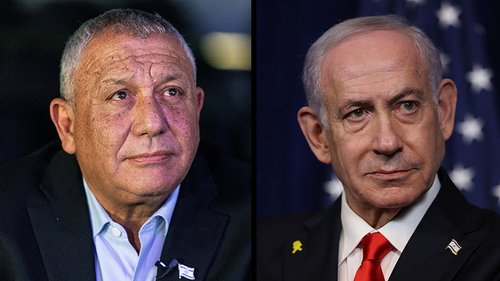
Netanyahu’s Likud party is projected to secure 26 seats, a fall of 15 from its parliamentary strength in the prior term, while the opposition bloc led by former military chief Gadi Eisenkot is near 48 seats. The joint list and Ra’am together hold 17 seats in early counts and are poised for a 19‑seat finish, exceeding the 15 seats recorded in 2020.
Gadi Eisenkot said:
"If these are the final results, this is a victory for the statist‑Zionist majority in Israel."
Netanyahu told his supporters:
"We must establish a strong, right‑wing, national government."
Israel’s legislature contains 120 seats, so a simple majority requires 61. With both the ruling and opposition blocs falling short, the outcome will hinge on coalition negotiations, potentially involving the Arab parties that hold the balance of power.
Voter turnout reached 77.7%, the highest percentage since 1999, and the Central Elections Committee said that after 85% of ballots were counted, Netanyahu’s bloc led with 53 seats and the opposition had 48.
With about 500,000 special double‑envelope ballots still to be tallied—votes cast by soldiers, diplomats and others voting away from their registered polling stations—results could ultimately shift seat counts. The final tally is expected by Thursday evening, with official results to be published on Friday, the committee stated.
Economic fallout
In response to the incomplete outcome, Tel Aviv’s stock market fell sharply, with the TA‑35 index down 1.81 percent and the broader TA‑125 index down 2.46 percent on Wednesday, Xinhua reported. The TA‑90 index plunged 4.47 percent, while the TA‑Banks‑5 index led the rout, falling 4.85 percent.
Gad Lior, a senior analyst at the Israeli daily Yedioth Ahronoth, said the sell–off was driven by political uncertainty, the risk of another Netanyahu‑led government struggling with high living costs, and fears of a renewed war with Iran.
Joseph Freiman, CEO of Israeli financial group Prico, told Xinhua:
"Shifting election results had reversed the shekel's earlier gains."
The Israeli shekel weakened against the dollar, falling 1.62 percent to 3.128 shekels per U.S. dollar by the end of the session, according to official Bank of Israel rates.
Coalition negotiations on the horizon
President Isaac Herzog will begin consulting the bloc leaders next week, the Al Jazeera source notes, to nominate a prime‑minister candidate who has the best chance of forming a government. The chosen candidate has 28 days to build a coalition, with a possible 14‑day extension, before failing and the mandate passing to another member of parliament. If no coalition forms, the Knesset will dissolve and new elections will be called, with the caretaker cabinet remaining in place.
Both major blocs have signalled reluctance to allying with Arab parties. Mansour Abbas, leader of Ra’am, said:
"With the numbers we have now, there is no government."
Alon Pinkas, a former Israeli ambassador, warned that Mont’s appeal to keep Arabs on the sidelines would be problematic:
"There’s a price to pay, because the Arabs can’t be kept outside and only being considered and co‑opted when you need their votes."
Some analysts argue that, given the recent surge in Palestinian‑citizen turnout—estimated at about 80% and the highest since 1999—Arab parties could be leveraged to secure a governing majority. However, both parties have campaigned on opposing stances: Eisenkot has explicitly ruled out a minority government with Arab parties, and Netanyahu has similarly rejected such an arrangement.
With the final tallies still pending, the market remains on edge. Analysts caution that even a small shift from the special ballots could change the numbers enough to require a coalition that either includes or excludes Arab parties, potentially altering the political complexion of the government. Months of negotiations loom as Israeli politicians and voters await the official results that will – or will not – find a path to an operative majority in a country where no party has ever won an outright majority in over half a century.