In brief
With no parliamentary majority secured, Israel’s Israel’s political scene is poised for months of coalition negotiations. Netanyahu’s Likud bloc is projected at 53 seats, the opposition at 48, and Arab parties at 19 – a record high – as the 77.7% turnout marks the highest since 1999. Stock markets and the shekel have reacted sharply to the political uncertainty, and key observers warn that both Jewish‑led blocs may ultimately have to engage Arab parties to govern.
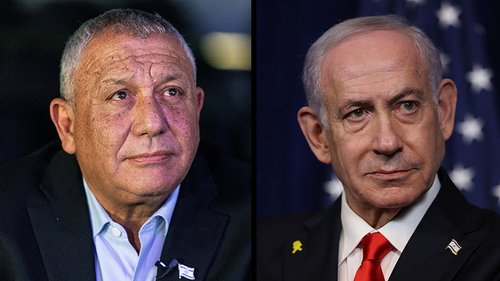
No single party has secured a majority in Israel’s 2026 parliamentary election, with Prime Minister Benjamin Netanyahu’s right‑wing bloc projected to win 53 out of 120 seats, the opposition led by former military chief Gadi Eisenkot short at 48 seats, and the Arab‑led Joint List and Ra’am set for a record 19 seats (UPI).
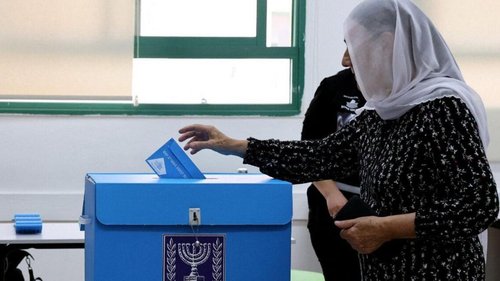
The vote, held on Tuesday, reached a turnout of 77.7 percent of eligible voters – the highest since 1999 – and the Double‑Envelope ballot count is expected to finish by Thursday (UPI).
Israel’s Central Elections Committee reported that roughly 5.7 million of 7.3 million eligible voters cast ballots, with Palestinian citizens of Israel turning out at an estimated 80 percent, a record for the community (Al Jazeera).
As of Wednesday evening, with over 85 percent of ballots counted, Netanyahu’s bloc had 53 seats, the opposition 48, and the Arab bloc 19, the most seats ever held by Arab parties in the Knesset (Xinhua, UPI).
Market Reactions Amid Political Uncertainty
Tel Aviv stocks fell sharply after partial results appeared, with the TA‑35 index down 1.81 percent, the TA‑125 index down 2.46 percent, the TA‑90 index down 4.47 percent, and the TA‑Banks‑5 index down 4.85 percent (Xinhua).
Gad Lior, a senior analyst at Yedioth Ahronoth, said the sell‑off was driven by political uncertainty and concerns that another Netanyahu‑led government might again struggle to address economic challenges, particularly the high cost of living, and that fears of a renewed war with Iran also weighed on investor sentiment (Xinhua).
Joseph Freiman, CEO of Prico, told Xinhua that the shifting election results reversed the shekel’s earlier gains; as vote counting progressed, Netanyahu’s bloc gradually took the lead, triggering a reversal in currency market sentiment (Xinhua).
The Israeli shekel weakened against major world currencies, falling 1.62 percent against the U.S. dollar to 3.128 shekels per dollar, according to official exchange rates issued by the Bank of Israel (Xinhua).
Coalition Negotiations and the Role of Arab Parties
Alon Pinkas, a former Israeli ambassador, warned that a government might prove difficult to construct for parties such as Eisenkot’s, which earlier exit polls had put narrowly ahead, because they had promised not to form coalitions with Arab parties during the campaign (Al Jazeera).
He said, “The Arabs can’t be kept outside and only being considered and co‑opted when you need their votes,” and added that the Arab‑led lists will make demands that a Jewish‑led coalition government may not support (Al Jazeera).
“With the numbers we have now, there is no government,”
Mansour Abbas, leader of the United Arab List (Ra’am), told Israel’s Channel 12 before preliminary votes began trickling in that he hopes the final election results will allow the anti‑Netanyahu bloc, including his party, to win the 61 seats required to form a government (Al Jazeera).
Unlike the previous elections, neither Netanyahu’s coalition nor the opposition appeared ready to ally with Arab parties that could provide the balance needed for a majority. Analysts say that both Jewish‑led blocs may ultimately have to engage Arab parties to form a functioning government (Al Jazeera).
If neither bloc secures a clear parliamentary majority, President Isaac Herzog will consult party leaders on who they want as prime minister, before tasking the candidate he believes has the best chance of forming a government. That candidate has 28 days to build a coalition, with a possible 14‑day extension. If they fail, the mandate can pass to another member of parliament, and if that also fails, the Knesset is dissolved and Israelis return to the polls, with the current cabinet staying on as caretaker (Al Jazeera).
All parties will be under scrutiny as they negotiate, especially over key policy areas. Netanyahu’s outgoing government has been described as the most right‑wing in Israeli history, featuring far‑right ministers such as National Security Minister Itamar Ben‑Gvir and Finance Minister Bezalel Smotrich, whose policies have drawn criticism from opposition leaders and the Arab bloc (Al Jazeera).
The final tally will be expected by Friday, with official results formally published on November 4, and the political helix that will shape Israel’s next government will soon unfold (Al Jazeera, UPI).