India's Election Commission (ECI), a cornerstone of democracy in the country, is currently grappling with a significant credibility crisis. Recent weeks have seen opposition parties launching a barrage of allegations against the ECI, accusing it of voter fraud, electoral manipulation, and inconsistencies in electoral rolls. As these claims emerge, the Commission has staunchly denied any wrongdoing.
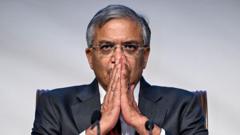
In a sign of escalating tensions, opposition leaders have expressed intentions to initiate impeachment proceedings against Chief Election Commissioner Gyanesh Kumar. However, as of the last day of the monsoon session of parliament, no formal motion had been filed due to insufficient backing among opposition members.
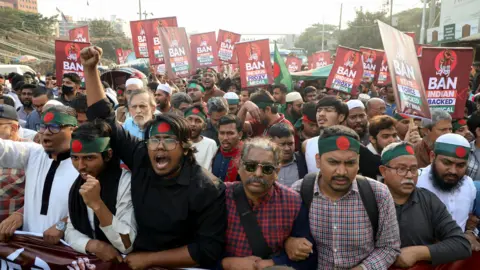
At the forefront of this political battle is Rahul Gandhi, leader of the Congress party, who has embarked on a dramatic 16-day, 1,300km march in Bihar state dubbed the Voter Adhikar Yatra, or Voter Rights March. This initiative aims to protest the ECI as the state gears up for crucial elections later this year, amid ongoing controversy regarding the revision of the electoral rolls.
Gandhi initially alleged in August that the ECI was colluding with the ruling Bharatiya Janata Party (BJP) to manipulate the forthcoming 2024 general elections. He claimed that detailed analysis of the ECI's records revealed over 100,000 fraudulent voters in a Karnataka constituency, a claim that the Commission has labeled as false.
The controversy intensified following the Special Intensive Revision (SIR) conducted between June and July, where the ECI maintained that its representatives verified all of Bihar's 78.9 million voters to update long-outdated voter lists. Nonetheless, opposition parties have contended that the revision process has disenfranchised many, particularly migrants, due to stringent documentation requirements.
Upon releasing a draft of the updated voter list on 1 August, reports indicated various inaccuracies, including misassigned genders and the presence of deceased individuals on the rolls. The revised draft excluded 6.5 million voters, a change the ECI attribute to the removal of duplicates and deceased individuals, while those wrongfully omitted were given until 1 September to appeal their exclusion.
Further complicating matters, the manner in which the ECI published the names of the omitted voters has drawn scrutiny, with critics questioning the lack of machine-readable formats that could facilitate independent verification. Following an intervention from India's Supreme Court, the ECI was directed to publish a searchable voter list and clarify reasons for exclusions, marking a stark reminder of the Commission's "procedural failures."
In a rare weekend press conference, Gyanesh Kumar addressed these growing allegations, labeling the opposition's claims as an insult to India's constitution. He challenged Gandhi to provide proof of his allegations or apologize, yet his statements have incited further backlash, with some opposition leaders implying a lack of transparency and decorum in his responses.
Experts acknowledge that while the enormity of voter changes can raise concerns, substantial evidence of wrongdoing must be presented. Former chief election commissioner N Gopalaswami pointed out that significant alterations in voter rolls can occur during intense verification processes, referencing a similar past instance in Karnataka.
Despite this acknowledgment, the ongoing voter rights movement and impending elections in Bihar ensure that the controversy won't subside soon. As senior journalist Smita Gupta noted, the opposition is poised to leverage the ECI’s perceived failings in the political arena.
Amid all these developments, a troubling trend emerges regarding public trust in the ECI. According to research from Lokniti, perceptions of the Commission's integrity are decreasing, with recent surveys indicating a climbing mistrust among voters. Former chief election commissioner SY Quraishi emphasized the importance of both actual and perceived impartiality in maintaining public trust, which is vital for the integrity of the electoral process.
As electoral tensions mount and scrutiny intensifies, India’s Election Commission is at a critical crossroads, struggling to uphold its credibility amidst a politically charged landscape.