In brief
Brazilian students gathered at Morro do Cristo on Sunday, November 2, to protest Senator Flavio Bolsonaro’s allegations of being the true president‑elect. The demonstration, part of the “Brasil com S” campaign, came amid weeks of nationwide protests following President Lula’s victory. The event underscores continuing concerns about the nation’s democratic process.
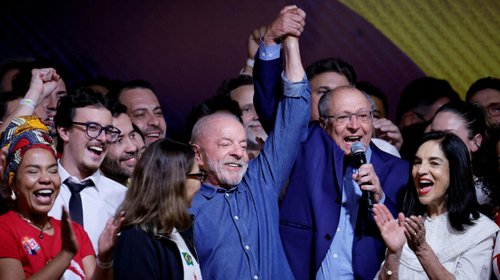
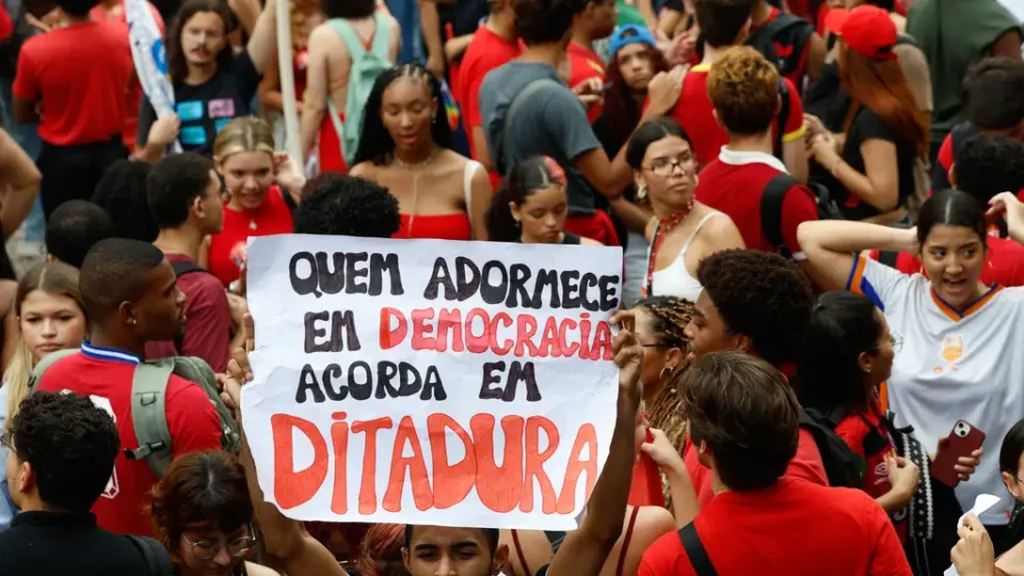
On Sunday, November 2, students from across Brazil converged on Morro do Cristo in Salvador to defend the country’s democratic institutions, demanding that the results of the October 25 presidential election be respected. The mobilization was organized by the National Union of Students (UNE) and joined a wave of demonstrations that have taken place in several regions since the nationwide polls were held.
Students marched in a display of solidarity with votes cast for President Luiz Inácio Lula da Silva, challenging the claims of Senator Flavio Bolsonaro, who had won the state of Minas Gerais but was defeated nationwide. Bolsonaro, who had appeared in a letter released on October 28, initially claimed to be the “true president‑elect,” a phrase he later altered to “leader of Brazil” after critics pointed to the official results. The original letter bore the archaic spelling “Estados Unidos do Brazil.”
“True president‑elect.”
The UNE’s statement of the day explained that the protest was part of the “Brasil com S” campaign, a movement that seeks to underscore the integrity of Brazil’s electoral process and the sovereignty of its people. The organization called for an end to any attempt to undermine the legitimacy of the election and for a nationwide reaffirmation of democratic values.
Background of the Protests
Brazil’s October 25 election marked a significant moment in the country’s political history. President Lula, who had previously served from 2003 to 2011, secured a third term after a campaign that highlighted environmental concerns and social inequality. The outcome was confirmed by the Superior Electoral Court, which affirmed the tally that placed Lula at 55.3% of the vote, surpassing the 50% threshold. Bolsonaro’s appeal to autonomy from the results reflected a broader pattern of contested elections that have sparked public outcry across Latin America.
In the days following the elections, student groups at universities nationwide staged protests that grew into large-scale demonstrations. The movements warned against the politicization of the electoral system, calling for federal oversight and reforms that would prevent future disputes. According to the UNE’s documentation, the “Brasil com S” initiative was a direct response to Bolsonaro’s initial claims that his letter declared him the “true president‑elect.” That claim, widely echoed by his supporters, was criticized by opposition parties and thought leaders who saw it as an attempt to delegitimize the official results.
Flavio Bolsonaro’s letter, initially released in October, was amended on a subsequent version that replaced the emblem and switched “true president‑elect” to the less aggressive “leader of Brazil.” The document’s revision, however, did not quell the accusations that Bolsonaro sought to subvert Brazil’s constitutional order. Students in Salvador therefore viewed the mobilization as a crucial standpoint: a defence of democratic integrity, a call for unity, and a reason to continue pressing for institutional accountability.
Authorities have expressed support for peaceful protesting but have also signaled heightened scrutiny of any attempt to incite violence or obstruct the electoral process. The Brazilian legal system – with its constitutional guardrails – has historically forced the candidacy of sitting politicians to skip the date if their actions hamper democracy. In this case there have been no official investigations, but the UNE has urged that the national legislature scrutinize Bolsonaro’s conduct closely.
Additionally, the protest on Sunday highlighted the role of the student movement in shaping the democratic dialogue. The UNE’s use of “Brasil com S” – translating to “Brazil with an S,” a nod to democracy, stability and the nation’s sovereignty – underscores a strategic framing that has been central to the student mobilization since the early months of the Lula administration.
While these protests have brought national attention, the question of the long‑term impact remains. Critics argue that while public mobilization cannot change the electoral verdict in real time, it may install pressure on lawmakers to adopt institutional reforms. Others contend that the protests risk creating polarization, causing a breakdown of trust in Brazil’s democratic traditions. Nonetheless, the students’ voice remains a critical element in shaping Brazil’s future political culture.
In the days to come, analysts will scrutinize how the government, judiciary, and civil society react to the demands of the students and whether effective changes emerge from the sustained pressure on the nation's democratic institutions. For now, the voice of the students continues to echo in Morro do Cristo and beyond, a testament to the resilience of Brazilian democracy amid uncertainty.