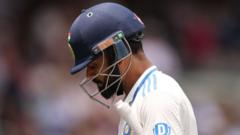
The recent cricketing landscape in India has dimmed as fans grapple with the harsh realities of a 1-3 series loss to Australia, marking a stark decline in the once-dominant Border-Gavaskar Trophy era. Historically viewed as an impervious team, India’s recent performances have laid bare the flaws within, exposing vulnerabilities in both batting and bowling departments. Traditional powerhouses like Jasprit Bumrah were effective, but the batting lineup suffered tremendously, resulting in poor showings and raising questions about the team's depth and direction.
The fallout from this series not only cast a shadow over the team's capability but also robbed India of a chance to compete in the upcoming World Test Championship (WTC) final, ending their consecutive appearances in 2021 and 2023. This shift comes on the heels of losing six out of the last eight Tests, including a shocking home loss to New Zealand, leading to an unsettling introspection within the cricketing hierarchy.
As the Indian squad prepares for a challenging five-Test series in England, their uphill battle becomes clear. With no series victory in England since 2007, the conditions are notorious for punishing inexperienced players. Further complicating matters for selectors is the poor form of senior players, particularly captain Rohit Sharma and former captain Virat Kohli. Sharma scored a meager 31 runs in the series against Australia, even opting out of the final Test based on his form. Kohli's performance, though slightly better with 190 runs, showed alarming trends with frequent dismissals raising concerns about his technique and mental resilience.
With esteemed players like Sharma and Kohli struggling to deliver, the search for successors rises in urgency. The fledgling talents of KL Rahul, Rishabh Pant, and Shubman Gill have shown flashes of promise but lack the consistency required at the international level. Meanwhile, promising newcomers like young left-hander Abhishek Sharma and the standout Yashasvi Jaiswal are being positioned as potential stalwarts for the future.
In contrast, the bowling department, led by a formidable Jasprit Bumrah who achieved a stunning 32 wickets against Australia, looks solid on paper. Nonetheless, Bumrah's workload demands careful management to prevent exhausting such a vital asset, particularly as the team transitions. With the retirement of key spinner Ravichandran Ashwin and the off-form Ravindra Jadeja, the spin department appears thin, requiring continuity and nurturing of emerging talents.
In a move aimed at revitalizing performance and addressing recent shortcomings, the cricket board is expediting a transition plan. Selectors have begun scouting talent from the domestic Ranji Trophy, and veterans like Sharma and Kohli may be urged to return to domestic levels to regain their form.
Balancing a transitioning team and addressing veterans’ struggles requires nuanced decision-making, avoiding hasty reactions. Past instances, such as the team’s recovery following a 4-0 whitewash in 2011 post-World Cup success, provide a glimmer of hope. Led by emerging talents, India managed to rise and keep its position at the summit of cricket worldwide.
As the cricketing community observes these evolving dynamics, the pressing question remains whether Indian cricket can channel its wealth of emerging talent to rejuvenate a team struggling to uphold its proud legacy.
The fallout from this series not only cast a shadow over the team's capability but also robbed India of a chance to compete in the upcoming World Test Championship (WTC) final, ending their consecutive appearances in 2021 and 2023. This shift comes on the heels of losing six out of the last eight Tests, including a shocking home loss to New Zealand, leading to an unsettling introspection within the cricketing hierarchy.
As the Indian squad prepares for a challenging five-Test series in England, their uphill battle becomes clear. With no series victory in England since 2007, the conditions are notorious for punishing inexperienced players. Further complicating matters for selectors is the poor form of senior players, particularly captain Rohit Sharma and former captain Virat Kohli. Sharma scored a meager 31 runs in the series against Australia, even opting out of the final Test based on his form. Kohli's performance, though slightly better with 190 runs, showed alarming trends with frequent dismissals raising concerns about his technique and mental resilience.
With esteemed players like Sharma and Kohli struggling to deliver, the search for successors rises in urgency. The fledgling talents of KL Rahul, Rishabh Pant, and Shubman Gill have shown flashes of promise but lack the consistency required at the international level. Meanwhile, promising newcomers like young left-hander Abhishek Sharma and the standout Yashasvi Jaiswal are being positioned as potential stalwarts for the future.
In contrast, the bowling department, led by a formidable Jasprit Bumrah who achieved a stunning 32 wickets against Australia, looks solid on paper. Nonetheless, Bumrah's workload demands careful management to prevent exhausting such a vital asset, particularly as the team transitions. With the retirement of key spinner Ravichandran Ashwin and the off-form Ravindra Jadeja, the spin department appears thin, requiring continuity and nurturing of emerging talents.
In a move aimed at revitalizing performance and addressing recent shortcomings, the cricket board is expediting a transition plan. Selectors have begun scouting talent from the domestic Ranji Trophy, and veterans like Sharma and Kohli may be urged to return to domestic levels to regain their form.
Balancing a transitioning team and addressing veterans’ struggles requires nuanced decision-making, avoiding hasty reactions. Past instances, such as the team’s recovery following a 4-0 whitewash in 2011 post-World Cup success, provide a glimmer of hope. Led by emerging talents, India managed to rise and keep its position at the summit of cricket worldwide.
As the cricketing community observes these evolving dynamics, the pressing question remains whether Indian cricket can channel its wealth of emerging talent to rejuvenate a team struggling to uphold its proud legacy.