Syria will hold its first parliamentary elections on Sunday since the fall of Bashar al-Assad, amid concerns over inclusivity and successive delays.
There will be no direct vote for the People's Assembly, which will be responsible for legislation during a transitional period. Instead, electoral colleges will select representatives for two-thirds of the 210 seats. Interim President Ahmed al-Sharaa will appoint the rest.
Long-time former President Assad was ousted by Sharaa's forces 10 months ago after a 13-year civil war.
Authorities say they have postponed the polls for security reasons in two Kurdish-controlled provinces and a third which saw deadly fighting between government forces and Druze militias.
The clashes, in July, marked the latest outbreak of sectarian violence in Syria since Assad's overthrow.
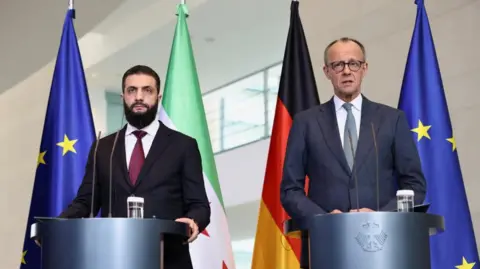
In a recent speech at the UN General Assembly, Sharaa promised to bring to justice everyone responsible for the bloodshed and those who committed atrocities under Assad. He pledged that Syria was now rebuilding itself through establishing a new state, building institutions and laws that guarantee the rights of all without exception.
Sunday's polls will be overseen by the Higher Committee for the Syrian People's Assembly Elections, whose members were chosen by the president in June. The number of seats allocated in each of the 60 districts is based on census data from 2010, before the civil war led to the deaths of over 600,000 people and displaced 12 million.
The postponement of elections in Raqqa, Hassakeh, and Suweida means that electoral colleges in only 50 out of 60 districts will be choosing representatives for about 120 seats.
There are over 1,500 candidates, but the electoral process has faced criticism for alleged restrictions on inclusivity, particularly concerning representation of women and minorities. At least 20% of electoral college members must be women, but there are no quotas for female lawmakers or representation from ethnic and religious minorities.
Sharaa defended the electoral process, stating that ongoing conflict and potential voter documentation issues for millions of refugees made conducting widespread elections complicated. Critics have labeled the elections as lacking true democratic intent, noting the executive's direct influence over parliament's makeup.
The elections are deemed by many as more of an appointment than a true representative process, with doubts over whether the interim government reflects the will of the Syrian people.