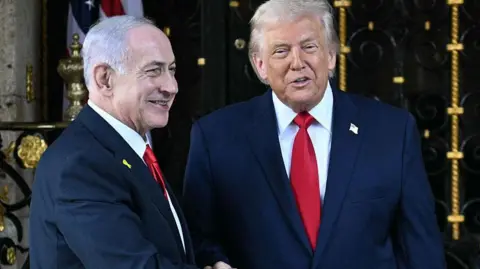
US envoy Steve Witkoff has announced the start of phase two of President Donald Trump's plan to end the war in Gaza, with a technocratic Palestinian government established in the territory. Under phase one, Hamas and Israel agreed a ceasefire in October, as well as a hostage-prisoner exchange, a partial Israeli withdrawal, and an aid surge. Witkoff stated that phase two would also see the reconstruction and full demilitarization of Gaza, including the disarmament of Hamas and other Palestinian groups. The US expects Hamas to comply fully with its obligations, he warned, noting these include the return of the body of the last dead Israeli hostage. Failure to do so will bring serious consequences.
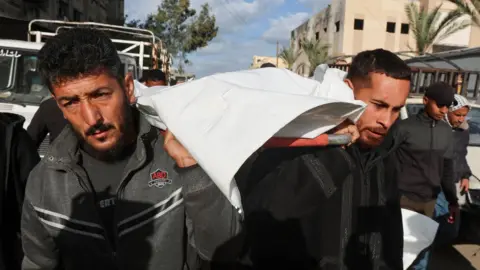
However, two key points of phase two could be problematic. Hamas has previously refused to give up its weapons without the creation of an independent Palestinian state, and Israel has not committed to fully withdrawing from Gaza. The ceasefire is also fragile, with both sides accusing each other of repeated violations, and almost 450 Palestinians have been killed in Israeli strikes since it came into force.
In his statement, Witkoff declared that with the launch of phase two of Trump's 20-point peace plan, Gaza was moving from ceasefire to demilitarization, technocratic governance, and reconstruction. Following the announcement, regional mediators including Egypt, Qatar and Turkey welcomed the formation of what they called the Palestinian Technocratic Committee to Administer the Gaza Strip, saying it would contribute to stabilizing and improving the humanitarian situation.
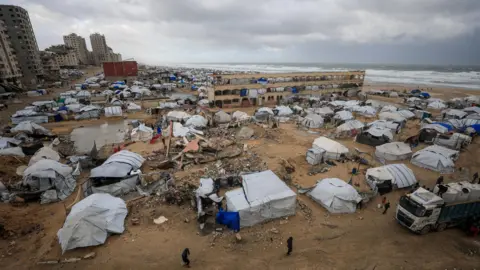
The technocratic government is set to operate under the supervision of a Board of Peace, chaired by Trump, with announcements related to the board expected in the coming days. However, challenges remain as ongoing humanitarian conditions in the territory are dire, and the tension between Hamas and the Israeli government continues to loom heavily over the peace initiative.
However, two key points of phase two could be problematic. Hamas has previously refused to give up its weapons without the creation of an independent Palestinian state, and Israel has not committed to fully withdrawing from Gaza. The ceasefire is also fragile, with both sides accusing each other of repeated violations, and almost 450 Palestinians have been killed in Israeli strikes since it came into force.
In his statement, Witkoff declared that with the launch of phase two of Trump's 20-point peace plan, Gaza was moving from ceasefire to demilitarization, technocratic governance, and reconstruction. Following the announcement, regional mediators including Egypt, Qatar and Turkey welcomed the formation of what they called the Palestinian Technocratic Committee to Administer the Gaza Strip, saying it would contribute to stabilizing and improving the humanitarian situation.
The technocratic government is set to operate under the supervision of a Board of Peace, chaired by Trump, with announcements related to the board expected in the coming days. However, challenges remain as ongoing humanitarian conditions in the territory are dire, and the tension between Hamas and the Israeli government continues to loom heavily over the peace initiative.