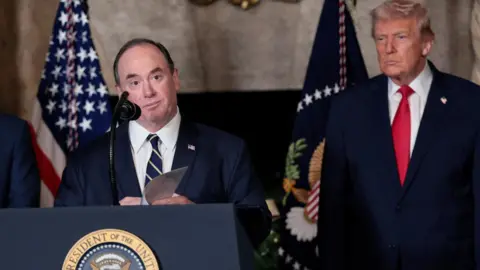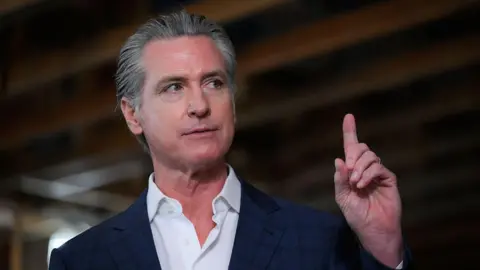
Donald Trump has stated that he believes people with learning disabilities should not be president, renewing his mockery towards California Governor Gavin Newsom regarding his dyslexia. Trump described Newsom, a potential Democratic candidate for the presidency, as 'dumb' and made fun of his struggles with reading and spelling, prompting a fiery response from the governor who called him 'a brain-dead moron.'
The National Center for Learning Disabilities expressed its dismay at Trump's comments, emphasizing that dyslexia affects nearly one in five Americans and does not diminish a person's intelligence.
In his remarks from the Oval Office, Trump insinuated that dyslexia denotes low intelligence, saying, 'Honestly, I'm all for people with learning disabilities, but not for my president.' Newsom countered Trump’s claims by asserting his own experiences with dyslexia and poignant responses to Trump’s antics on social media.
This back-and-forth came alongside value-driven discussions around disabilities, with advocates pointing out that past U.S. leaders, including George Washington and John F. Kennedy, possibly faced similar challenges.
The heated exchange underscores the complexities and sensitivities related to disabilities in political contexts, with advocates urging a more inclusive dialogue on capability and leadership.
The National Center for Learning Disabilities expressed its dismay at Trump's comments, emphasizing that dyslexia affects nearly one in five Americans and does not diminish a person's intelligence.
In his remarks from the Oval Office, Trump insinuated that dyslexia denotes low intelligence, saying, 'Honestly, I'm all for people with learning disabilities, but not for my president.' Newsom countered Trump’s claims by asserting his own experiences with dyslexia and poignant responses to Trump’s antics on social media.
This back-and-forth came alongside value-driven discussions around disabilities, with advocates pointing out that past U.S. leaders, including George Washington and John F. Kennedy, possibly faced similar challenges.
The heated exchange underscores the complexities and sensitivities related to disabilities in political contexts, with advocates urging a more inclusive dialogue on capability and leadership.