In brief
An explosion at a firecracker factory in Thrissur, Kerala, has resulted in at least 13 fatalities and numerous injuries, with some victims reported in critical condition. The factory was preparing for the upcoming Thrissur Pooram festival. This tragedy follows a similar incident in Tamil Nadu, prompting discussions on safety standards in India's volatile fireworks industry.
At least 13 people have been killed in an explosion at a firecracker factory in India's southern state of Kerala, officials say.
The incident took place in Thrissur, where around 40 people were believed to be assembling firecrackers in a cluster of sheds for an upcoming festival. Several others were injured, with five reported to be in critical condition.
This was the second such incident this week; on Sunday, a blast at a firecracker factory in neighbouring Tamil Nadu state left at least 25 dead.
Accidental explosions are a grim routine in India's fireworks industry, recurring with troubling regularity, particularly around Sivakasi in Tamil Nadu, which produces much of the country's supply.
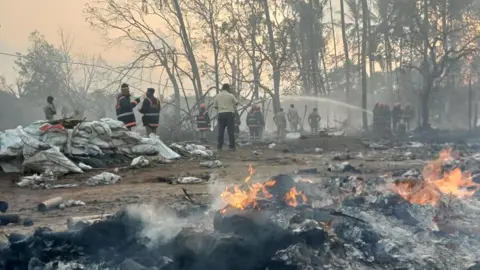
The explosion in Thrissur occurred around 15:30 local time, triggering secondary blasts that hampered rescue efforts as firecrackers were being made in temporary sheds near paddy fields. The force of the blast was felt kilometres away, with many residents mistaking it for an earthquake. Homes in the vicinity were damaged, prompting chaotic scenes as locals rushed to help pull out the injured and deceased.
Kerala's Revenue Minister K Rajan confirmed that all fireworks units preparing for the Thrissur Pooram festival had permission to manufacture and store fireworks in designated areas.
Officials suspect that high afternoon temperatures may have contributed to the tragedy, which has left the community in shock.
The victims were primarily workers at the factory, preparing for a major temple festival, with food prepared for an estimated 40 employees. A magisterial inquiry has been ordered to investigate the incident.
Prime Minister Narendra Modi announced financial assistance of ₹200,000 for the families of the deceased and ₹50,000 for those wounded. Kerala Chief Minister Pinarayi Vijayan has stated that medical experts would be brought in if needed to treat the burn victims.
Firecracker factory accidents are alarmingly common in India, as the industry often operates under weak safety standards, leading to tragic outcomes. This incident reiterates the urgent need for better regulatory oversight in what is a highly informal sector.