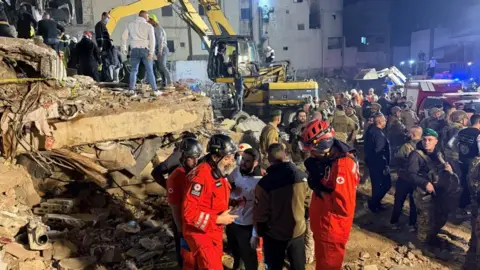
The death toll from the collapse of two residential buildings in the northern Lebanese city of Tripoli has risen to 15, state media say. Eight people were rescued alive, Civil Defence director general Imad Khreiss reported. The two adjoining buildings housed 22 residents, although local municipal authorities have warned that more individuals may still be unaccounted for.
Social media footage captured the moment the buildings collapsed, with one side giving way at the lower floors before both structures fell almost simultaneously. This disaster is the fifth residential building collapse in Tripoli this winter, igniting concerns over the growing issue of aging and undermaintained buildings in Lebanon's poorest city.
The footage shows a thick cloud of dust and debris enveloping the street as the buildings crumbled. Following the incident, large crowds gathered around what remained of the structures, which had left a significant crater at the site.
Tripoli's mayor, Abdel Hamid Karimeh, expressed that the city suffers from long-term dereliction, stating, Thousands of our people in Tripoli are threatened due to years of neglect. The situation is beyond the capabilities of the Tripoli municipality. He has since submitted his resignation to the interior minister, declaring Tripoli disaster-stricken.
President Joseph Aoun has indicated he is monitoring the developments and called for the mobilization of rescue workers across the country. Prime Minister Nawaf Salam characterized the building collapse as a humanitarian catastrophe, with assurances of government support for the affected residents.
The incident follows recent evacuations of nearby buildings due to structural issues and previous collapses, underscoring the dire state of Tripoli's residential infrastructure amid a lasting economic crisis and inadequate regulatory oversight. Many of the buildings in Lebanon were constructed without proper permits, leading to heightened risks during the harsh winter months.
In light of the collapse, the national syndicate for property owners condemned the incident as a result of negligence by the Lebanese state concerning the safety of its citizens, urging a national assessment of buildings at risk of similar failures.
Social media footage captured the moment the buildings collapsed, with one side giving way at the lower floors before both structures fell almost simultaneously. This disaster is the fifth residential building collapse in Tripoli this winter, igniting concerns over the growing issue of aging and undermaintained buildings in Lebanon's poorest city.
The footage shows a thick cloud of dust and debris enveloping the street as the buildings crumbled. Following the incident, large crowds gathered around what remained of the structures, which had left a significant crater at the site.
Tripoli's mayor, Abdel Hamid Karimeh, expressed that the city suffers from long-term dereliction, stating, Thousands of our people in Tripoli are threatened due to years of neglect. The situation is beyond the capabilities of the Tripoli municipality. He has since submitted his resignation to the interior minister, declaring Tripoli disaster-stricken.
President Joseph Aoun has indicated he is monitoring the developments and called for the mobilization of rescue workers across the country. Prime Minister Nawaf Salam characterized the building collapse as a humanitarian catastrophe, with assurances of government support for the affected residents.
The incident follows recent evacuations of nearby buildings due to structural issues and previous collapses, underscoring the dire state of Tripoli's residential infrastructure amid a lasting economic crisis and inadequate regulatory oversight. Many of the buildings in Lebanon were constructed without proper permits, leading to heightened risks during the harsh winter months.
In light of the collapse, the national syndicate for property owners condemned the incident as a result of negligence by the Lebanese state concerning the safety of its citizens, urging a national assessment of buildings at risk of similar failures.