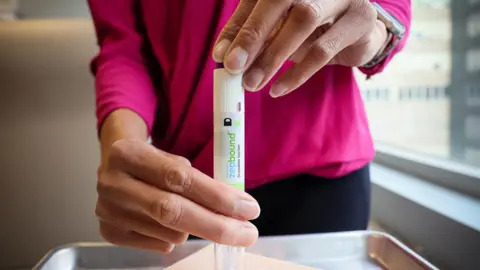
When Ruth Gonzalez decided to start taking the weight-loss medicine Zepbound last year, she first had to find a way to afford its roughly $350 (£260) monthly cost. The 56-year-old, who is self-employed and pays out of her own pocket because her health insurance does not cover weight-loss drugs, says the financial sacrifices have been worth it. The spike in her blood pressure, which had scared her into seeking a prescription, was back to normal within six weeks. She has also lost more than 40lb (18kg), dropping her weight to 175lb (79kg).
However, even with recent price cuts, weight-loss drugs remain out of reach for many. Shekinah Samayah-Thomas, who had bariatric surgery in 2017, struggled to continue taking Wegovy after California’s Medicaid program stopped covering it for weight loss. Advocates argue that the free market is not the best solution to get medicines to those in need and are pushing for better insurance coverage.
With obesity rates soaring in the US, competition between manufacturers has intensified. Companies are employing aggressive marketing strategies, including direct-to-consumer sales, to capture market share. Following price cuts for Zepbound and Wegovy, the competition pushes companies to find innovative solutions to combat the high costs of weight-loss medications.
Health advocates are now focusing on ensuring that insurers expand coverage for these necessary treatments, with hopes that recent Medicare trials could influence private insurers to follow suit.