Full confession. Dawson's Creek was my guilty pleasure in the late 90s.
Truthfully, I was probably a little too old to watch it in my early 20s, but my friends and I would often find ourselves under the duvet on the sofa on a Sunday morning after a big night out, nursing our hangovers with a cuppa and a side of American teen drama.
We might have giggled at the unrealistically articulate monologues, but secretly wished we'd also had that pitch-perfect snappy riposte to dole out to a disappointing boyfriend (or two).
The hit show was created by Kevin Williamson, who was also behind the Scream franchise and I Know What You Did Last Summer, and has previously described working on Dawson's Creek as a charmed experience.
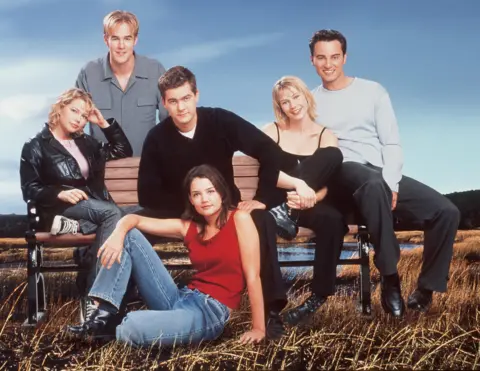
It followed a group of teenage friends living in the fictional small town of Capeside, Massachusetts, navigating the ups and downs of adolescence.
Dawson Leery - played by James Van Der Beek - was always at the centre of the series, which ran from 1998 to 2003.
The aspiring floppy-haired filmmaker could be sensitive but manipulative, lovable yet irritating. And Van Der Beek made the role his own.
“The show was built around him,” Emily Longeretta, director of features at Variety, told BBC News. “The creator Kevin Williamson has said many times... that Dawson was based on him [Williamson] and he had to find the right person to do that, and James immediately stepped into that role.”
Set against the backdrop of real-life issues, Dawson's Creek tackled themes of loss, grief, and mental health while maintaining accessibility for its audience.
While the series enjoyed a respectable following, averaging six million viewers during its run in the U.S., it found a dedicated fan base across the globe, including the UK and Australia.
Ultimately, the impact of Dawson's Creek transcends its screen time, shaping conversations around teenage experiences, emotions, and identity in a way few shows had attempted before it.
As we remember Dawson's Creek, the heartfelt performances of its cast and its pioneering themes remain a testament to the complex tapestry of adolescence that resonates with viewers even today.