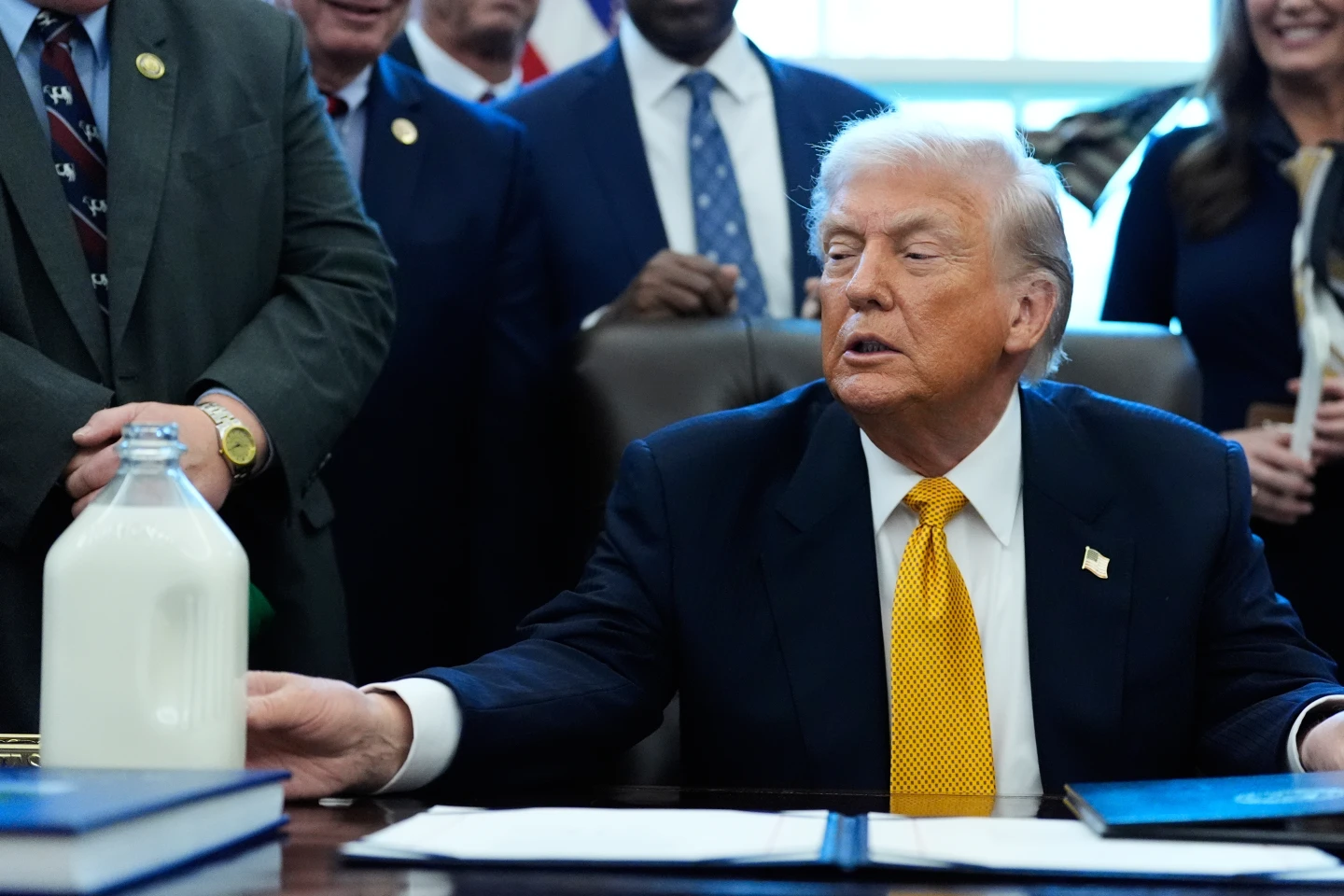
Whole milk is returning to school cafeterias nationwide after President Donald Trump signed the Whole Milk for Healthy Kids Act, reversing previous restrictions on higher-fat milk options enforced during the Obama administration.
The recently passed law allows schools participating in the National School Lunch Program to serve whole and 2% milk alongside traditional skim and low-fat options, which had been mandated since 2012.
During the signing ceremony, President Trump stated, Whether you’re a Democrat or a Republican, whole milk is a great thing, indicating bipartisan support for the dairy initiative.
Alongside the new whole milk provisions, schools will also be allowed to serve nondairy beverages that meet nutritional standards. With the approval of parents' notes regarding dietary restrictions, this opens up broader options for students.
This legislative move comes on the heels of the recently released Dietary Guidelines for Americans for 2025-2030, which recommend incorporating full-fat dairy products into a balanced diet, challenging prior emphasis on low-fat or fat-free dairy for consumers over the age of two.
The anticipated changes could begin as soon as this fall, but experts warn that some schools might need more time to adjust their supply chains accordingly.
Nutrition advocates have long contended that whole milk is not only a nutritious option but has been unjustly maligned. Studies suggest that children who consume whole milk face lower risks of obesity compared to those who opt for lower-fat alternatives. Critics have noted that many kids prefer the taste of whole milk, which often leads to better consumption rates and reduced waste.
Potential Impact on Nutrition
With nearly 30 million students enrolled in the National School Lunch Program, the new regulations promise major changes in school meal offerings. Health Secretary Robert Kennedy Jr. deemed the enactment as a long-overdue correction to school nutrition policy, whereas Agriculture Secretary Brooke Rollins critiqued prior initiatives aimed at eliminating whole milk from school menus.
Under the new requirements, schools must provide a variety of fluid milk options including organic and conventional whole, 2%, 1%, and lactose-free milk, ensuring that all choices meet federal nutritional standards. However, flavored milks that contain added sugars are still being evaluated against these guidelines.
Experts like Dr. Dariush Mozaffarian have highlighted the lack of substantial evidence linking dairy saturated fats to negative health consequences, arguing that milk should remain a staple in children's diets. As research evolves, advocates hope this reform marks a significant shift towards healthier milk consumption in schools.