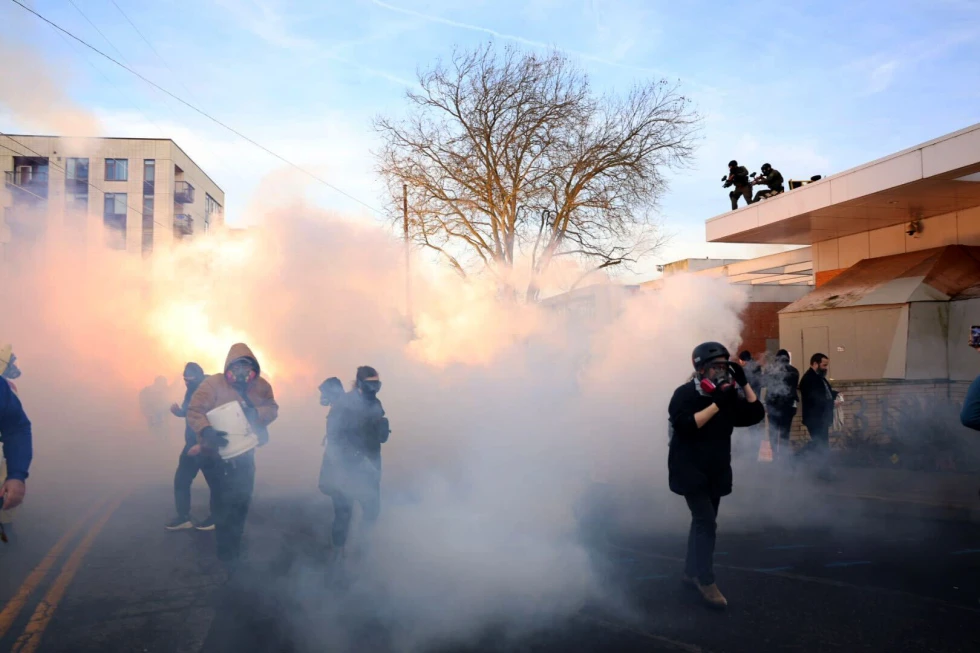
In a troubling scenario unfolding in Portland, Oregon, several residents of an affordable housing complex find themselves donning gas masks in the safety of their own homes, all in a bid to shield themselves from tear gas deployed by federal agents across the street. To combat the indiscriminate exposure to tear gas during protests centered around the U.S. Immigration and Customs Enforcement (ICE) building, parents are taking to extreme measures such as taping windows, stuffing wet towels under doors, and even having their children sleep in closets for a sense of security.
As these residents prepare to share their harrowing experiences with a federal judge, they are hopeful for redress through a lawsuit targeting the government’s use of tear gas. This legal action, initiated by the property manager and tenants of the Gray’s Landing complex in December, contends that the use of chemical munitions infringes upon their fundamental rights and jeopardizes their health.
The lawsuit highlights alarming health issues arising from the tear gas, with many residents experiencing respiratory problems including coughing and shortness of breath, severe enough to warrant emergency room visits. In one case, 72-year-old Susan Dooley, who suffers from diabetes and high blood pressure, was diagnosed with mild heart failure linked to the toxic exposure.
The ongoing demonstrations are in response to the aggressive immigration enforcement tactics adopted during the previous administration. The reliance on tear gas and other crowd-control measures by federal agents has faced much criticism. The city’s history of conflicts with the federal government over immigration policies adds an intricate layer to the current protests, reflecting broader tensions felt across numerous U.S. cities.
In a parallel case, another federal lawsuit temporarily restricted ICE agents from deploying tear gas at protests, indicating a judicial awareness of the associated risks. Residents at Gray’s Landing are demanding stronger protections and a halt to the invasive use of tear gas. The next steps will unfold in court as both sides present their cases regarding the constitutionality and necessity of such federal actions.
As these residents prepare to share their harrowing experiences with a federal judge, they are hopeful for redress through a lawsuit targeting the government’s use of tear gas. This legal action, initiated by the property manager and tenants of the Gray’s Landing complex in December, contends that the use of chemical munitions infringes upon their fundamental rights and jeopardizes their health.
The lawsuit highlights alarming health issues arising from the tear gas, with many residents experiencing respiratory problems including coughing and shortness of breath, severe enough to warrant emergency room visits. In one case, 72-year-old Susan Dooley, who suffers from diabetes and high blood pressure, was diagnosed with mild heart failure linked to the toxic exposure.
The ongoing demonstrations are in response to the aggressive immigration enforcement tactics adopted during the previous administration. The reliance on tear gas and other crowd-control measures by federal agents has faced much criticism. The city’s history of conflicts with the federal government over immigration policies adds an intricate layer to the current protests, reflecting broader tensions felt across numerous U.S. cities.
In a parallel case, another federal lawsuit temporarily restricted ICE agents from deploying tear gas at protests, indicating a judicial awareness of the associated risks. Residents at Gray’s Landing are demanding stronger protections and a halt to the invasive use of tear gas. The next steps will unfold in court as both sides present their cases regarding the constitutionality and necessity of such federal actions.