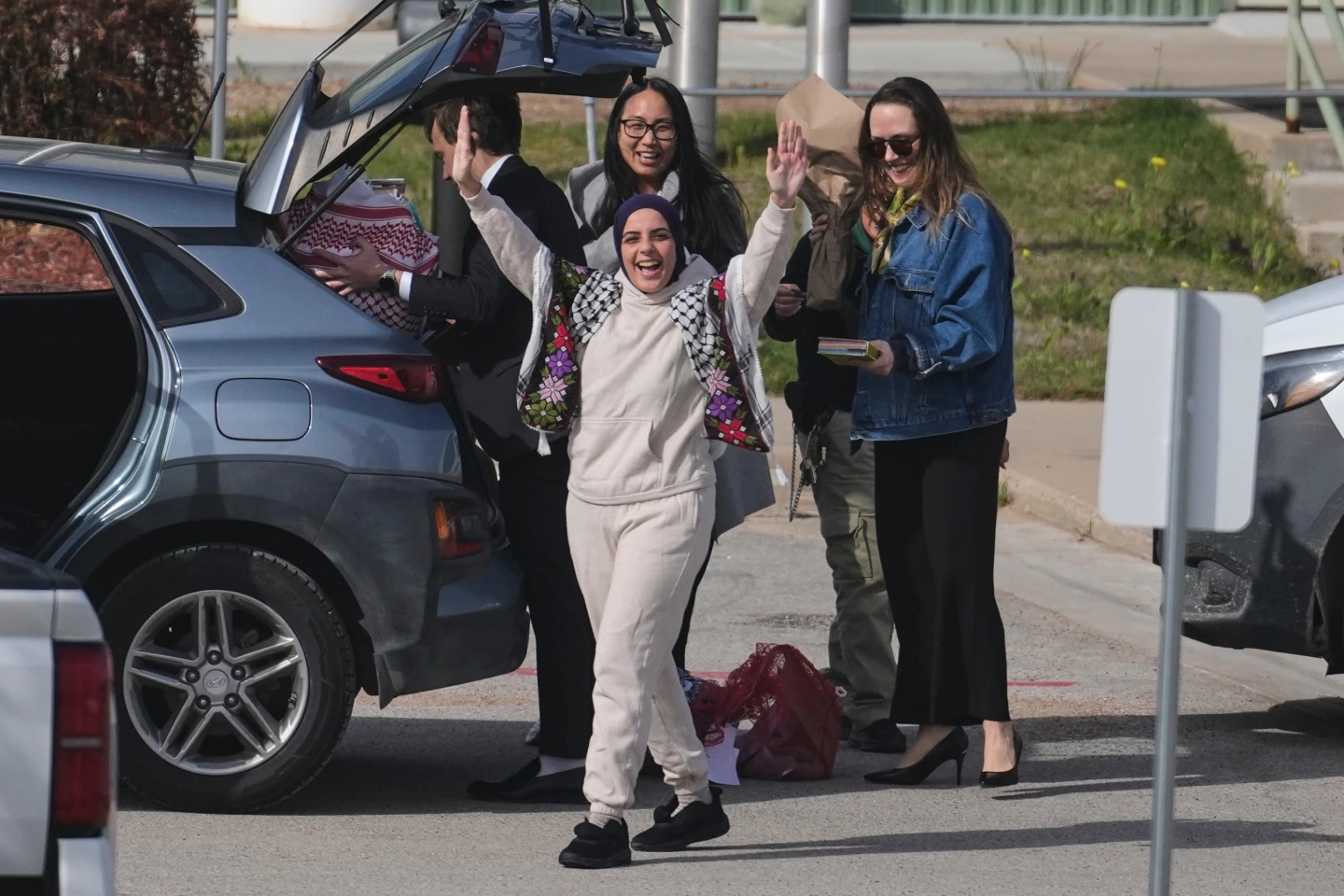
ALVARADO, Texas (AP) — A Palestinian woman, Leqaa Kordia, who was the final detainee from the Trump administration’s crackdown on pro-Palestinian activists, was released Monday on a $100,000 bond after spending a year in custody.
The 33-year-old from the West Bank had been living in New Jersey since 2016 and was detained in a U.S. immigration facility in Texas since March 2025. Kordia was among approximately 100 people arrested during protests outside Columbia University amid rising tensions in the Gaza region.
I don’t know what to say. I’m free! I’m free! Finally, after one year, Kordia expressed joyfully, meeting reporters upon her release.
Her release followed an immigration judge’s decision that challenged previous government objections to her bond. Kordia had been hospitalized recently due to health complications suffered during her time in detention.
Her cousin, Hamzah Abushaban, praised her release, stating, We are overwhelmed with relief and gratitude at the release of our beloved Leqaa Kordia. This past year has taken an unimaginable toll on Leqaa and our entire family. Kordia’s determination to fight for others in similar situations remained resolute, mentioning her intent to support ongoing efforts for detained individuals’ releases.
Having participated in protests stemming from personal losses during the Gaza conflict, Kordia emphasized the injustices she observed during her detention. She highlighted the unfairness of continuing detentions of individuals like her, asserting, There are a lot of people that shouldn’t be here in the first place. Kordia’s case resisted public attention, overshadowed by other significant detainee cases.
The legal battles surrounding Kordia revealed significant challenges in her immigration status, including allegations of overstaying her visa and sending funds to family members affected by the conflict in her homeland. However, a judge found her explanations credible, acknowledging evidence supporting her claims regarding the funds sent.
Though federal authorities expressed resistance to Kordia's release, the judge ruled favorably, citing substantial evidence supporting her case. As Kordia returns home, she looks forward to reuniting with her family and continuing her advocacy.