NEW YORK (AP) — Nicolás Maduro, the ousted Venezuelan president, is set to make his first appearance in an American courtroom on Monday facing narco-terrorism charges that the Trump administration cited to warrant his capture and extradition to the U.S.
The court appearance will take place at noon local time, where Maduro and his wife, Cilia Flores, are expected to engage in a brief legal proceeding that will likely spark a prolonged legal battle over their potential trial in the United States.
Authorities will transport the couple from a Brooklyn jail to a Manhattan courthouse located near where former President Donald Trump was previously convicted of falsifying business records.
In the U.S. legal system, Maduro is entitled to the same rights as any criminal defendant, including a jury trial by citizens of New York. However, his situation is nearly unique, as he navigates international legal complexities surrounding his arrest.
Maduro's defense lawyers plan to contest the legality of his arrest, putting forth arguments based on his current and previous status as a sovereign head of state. This strategy echoes that of Manuel Noriega, a Panamanian dictator who similarly attempted to avoid extradition in the 1990s.
Yet, the U.S. does not recognize Maduro as the legitimate head of Venezuela following a highly disputed reelection in 2024 which further complicates his legal standing.
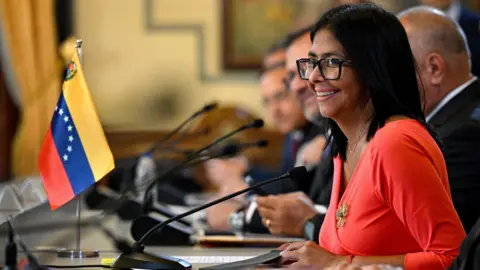
Venezuela’s recently appointed interim president, Delcy Rodríguez, has demanded that the U.S. return Maduro, portraying the U.S. overtures as motivated by a desire for control over Venezuela's rich natural resources. In an apparent attempt at softening her tone, she has also suggested a willingness to establish a collaborative relationship with the U.S.
The indictment made public on Saturday accuses Maduro and several co-conspirators of orchestrating drug trafficking operations, including collusion with major drug cartels to facilitate the movement of vast amounts of cocaine into the United States.
If convicted, their sentences could reach life imprisonment due to the severity of the charges. The legal implications of this case could significantly impact U.S.-Venezuela relations and further destabilize an already volatile political climate.
Before his capture, Maduro and his allies consistently claimed that U.S. aggression was rooted in a desire for access to Venezuela’s vast oil and mineral wealth.
The situation continues to evolve as the U.S. administration works through its legal options and the international ramifications of Maduro's indictment unfold in the coming days.