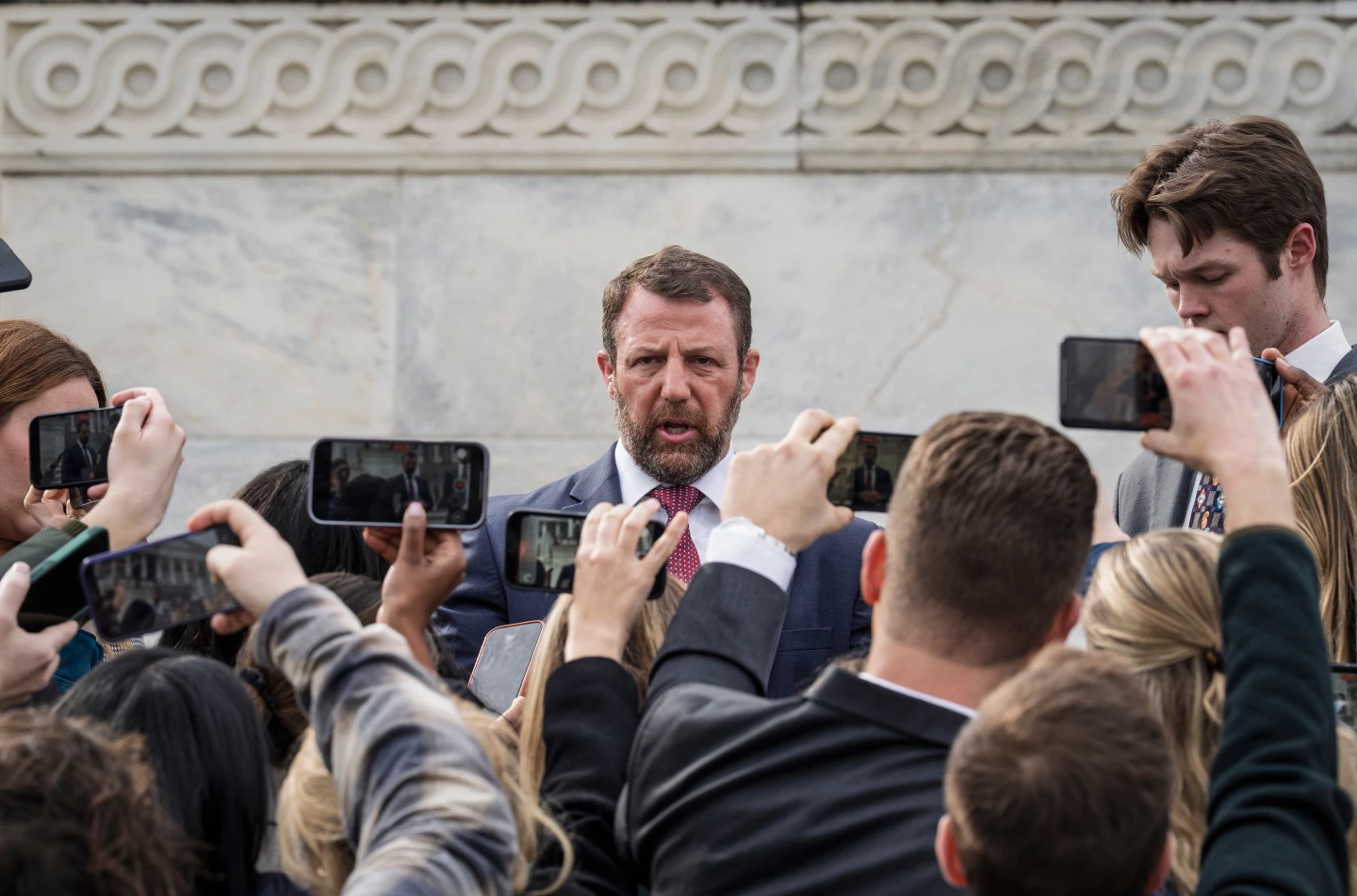
WASHINGTON (AP) — As Senator Markwayne Mullin prepares for his Senate confirmation hearings to become the next Secretary of Homeland Security, he is set to tackle a multitude of significant challenges from immigration enforcement to disaster response policies.
At the forefront of his responsibilities will be managing the nation's immigration framework, particularly the controversial mass deportation policies that have drawn criticism from both lawmakers and the public. Despite a surge in arrests under the Trump administration, many argue that the tactics used by immigration officers require reform following incidents that sparked public outrage.
Joining the department amidst a funding standoff, Mullin will have to work closely with Congress to secure necessary resources for Homeland Security operations. The recent funding lapse has led to unpaid workers within the department, contributing to longer security lines at airports due to staffing shortages.
His predecessor Kristi Noem faced considerable scrutiny over her leadership style and management failures which contributed to strained relations within Congress. Mullin's task will be to rebuild trust and foster cooperation to address the pressing demands for reform from Senate Democrats, who are insisting that changes must be made to immigration enforcement strategies before they approve further funding.
Moreover, he will need to address the turmoil within the Federal Emergency Management Agency (FEMA), which has been hindered by policy shifts and unresolved funding allocations for disaster management projects.
Mullin's alignment with the Trump administration poses both an advantage and a challenge as he approaches his new role. Observers note that he has consistently been vocal in Congress, often amplifying Trump’s messages and acting as a direct liaison representing administration interests. However, Mullin will have to navigate a complex landscape of expectations from various stakeholders, aiming for a pragmatic balance between enforcement numbers and effective, humane policy implementation.
As he prepares to embark on this demanding role, Mullin's approach and strategies will be critical in shaping the larger narrative surrounding immigration enforcement policy, disaster response, and inter-party relations in Congress.